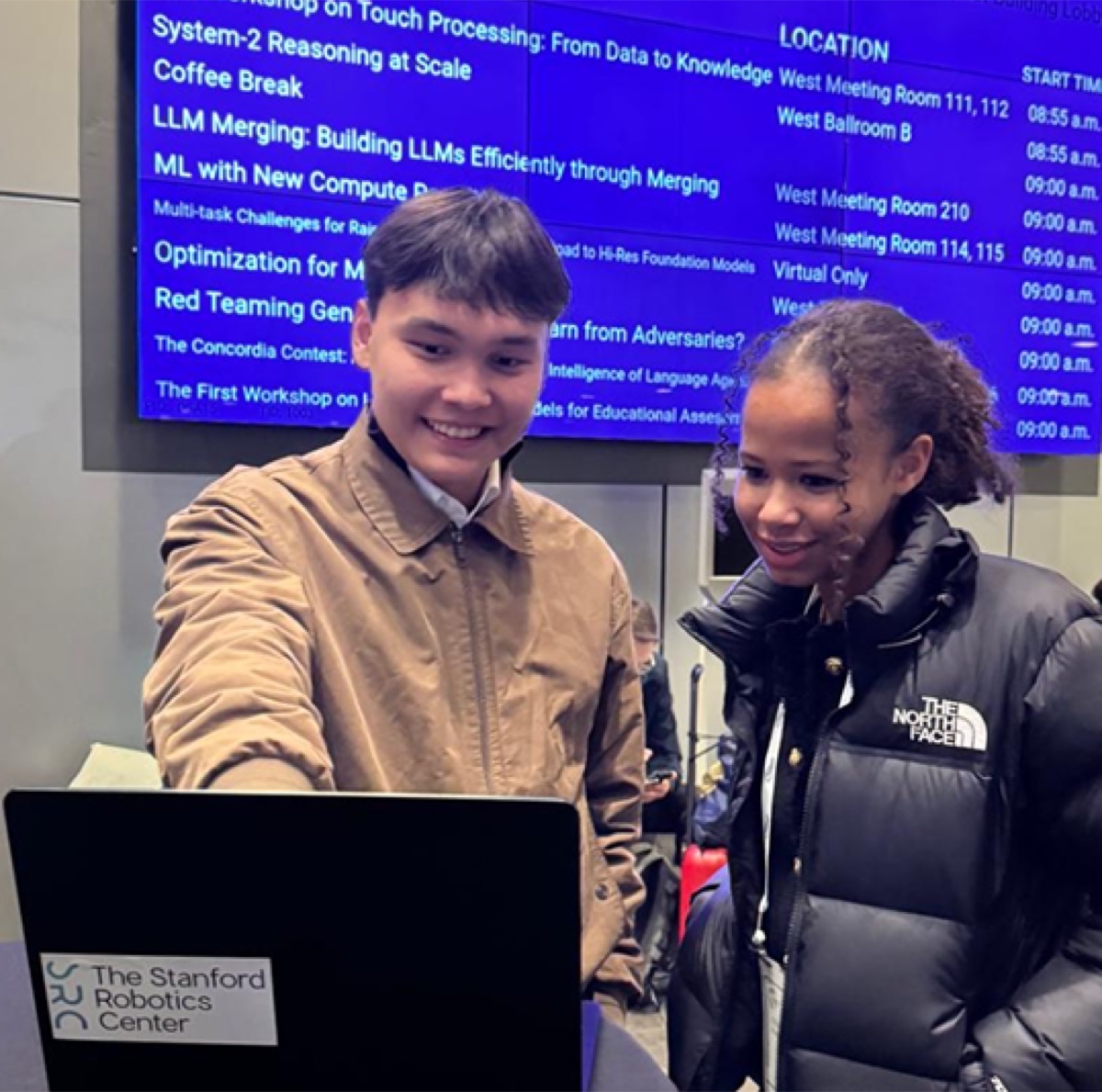
NeurIPS 2025 wrapped up in Vancouver this past December, and the numbers tell a clear story: student participation in top-tier AI research is no longer a novelty. It is becoming a structural feature of the conference itself.
This year, 230 students affiliated with Algoverse AI Research alone presented work across multiple NeurIPS workshops, contributing to over 60 research papers with a 68-73% acceptance rate. That is a single program's cohort at a single conference. Add in students from university labs, other research programs, and independent submissions, and the student presence at NeurIPS 2025 was substantial by any measure.
This article breaks down what happened at NeurIPS 2025 from the perspective of student research -- the topics that dominated workshops, the results that stood out, and the practical takeaways for anyone planning to submit to a future conference.
What Made NeurIPS 2025 Different for Student Researchers
NeurIPS has been growing for years, but 2025 marked a shift in how student work was received. Several factors contributed.
First, the workshop ecosystem continued to expand. NeurIPS 2025 hosted dozens of workshops covering an increasingly broad range of topics, from foundational machine learning theory to applied domains like healthcare, climate science, and education. More workshops means more entry points for student researchers, and it means a wider range of topics where a focused, well-executed student paper can make a genuine contribution.
Second, the research community has become more receptive to work from non-traditional authors. Five years ago, a paper authored primarily by high school students would have raised eyebrows regardless of its quality. Today, reviewers increasingly evaluate the work on its merits. This does not mean the bar has lowered -- it means the bias against younger researchers has started to erode.
Third, the tools available to student researchers have improved dramatically. Open-source models, publicly available benchmarks, cloud compute credits, and collaborative platforms like Overleaf and GitHub have reduced the infrastructure gap between a well-funded university lab and a motivated student working with a mentor.
The Research Topics That Dominated NeurIPS 2025 Workshops
If you attended NeurIPS 2025 workshops, certain themes came up again and again. Understanding these trends matters if you are planning a submission for 2026.
AI Safety and Alignment
Workshops focused on AI safety drew significant attention this year. With large language models being deployed at scale in consumer products, questions about alignment, robustness, and safe behavior are no longer theoretical. Student papers in this space explored topics like adversarial evaluation of language models, automated red-teaming approaches, and safety benchmarks for multi-agent systems.
The appeal of this area for student researchers is that many safety questions can be studied empirically without massive compute budgets. Designing evaluation protocols, constructing adversarial datasets, and analyzing model failure modes are all feasible projects for students with access to API endpoints and standard hardware.
Fairness and Responsible AI
Research on fairness, bias, and equity in AI systems was heavily represented across multiple workshops. This included work on dialect fairness in language models, demographic disparities in vision systems, and evaluation frameworks for measuring bias across different populations.
This topic area proved to be particularly strong for Algoverse students. Two students -- Abhay Gupta and Philip Meng -- were named 2025 Davidson Fellows, each receiving $25,000 scholarships for their research on dialect equity in large language models. The Davidson Fellows Scholarship selects only 20 recipients annually from more than 1,200 applicants across all fields, making this a significant external validation of the caliber of student research coming out of NeurIPS workshops.
LLM Evaluation and Benchmarking
As the number of large language models has proliferated, so has the need for rigorous evaluation. Workshops on evaluation methodology attracted a wave of student submissions focused on designing better benchmarks, identifying weaknesses in existing evaluation suites, and proposing new metrics for capabilities like reasoning, factual consistency, and instruction following.
One standout result in this space: a group of Algoverse students authored a paper titled "Semantic Self-Consistency," which was originally accepted at a NeurIPS workshop focused on mathematical AI. The paper was subsequently selected as one of just 20 papers featured in OpenAI's PaperBench project, a benchmark designed to evaluate AI systems' ability to replicate state-of-the-art research. Being included alongside papers from established research labs is a notable milestone for student-led work.
Multimodal Learning
Research at the intersection of vision, language, and other modalities continued to grow. Student papers in this area explored topics like cross-modal retrieval, multimodal reasoning benchmarks, and applications of vision-language models to domain-specific problems in science and medicine.
Healthcare and Biomedical AI
Workshops on AI for healthcare attracted a diverse set of student contributions, from applying machine learning to medical imaging tasks to developing NLP tools for clinical text analysis. Healthcare AI is an appealing area for students because the application domain provides clear motivation and the datasets (particularly public benchmarks and de-identified clinical data) are increasingly accessible.
Efficient Machine Learning
With growing concern about the computational cost of training and deploying large models, workshops on efficient ML methods saw strong student participation. Papers covered topics like model compression, knowledge distillation, efficient fine-tuning techniques, and inference optimization. These topics are well-suited to student research because they often involve clever algorithmic ideas rather than brute-force compute.
How Student Papers Performed at NeurIPS 2025
Raw acceptance numbers only tell part of the story. What matters more is how student work was received by the broader research community.
Citations and External Recognition
Several NeurIPS 2025 student papers have already been cited by researchers at institutions including MIT, Microsoft Research, the National Institutes of Health, Oxford, Princeton, and the University of Washington. Early citations from these institutions indicate that the work is being read and built upon by active researchers in the field -- not just filed away in workshop proceedings.
This is worth emphasizing because one common concern about student research is whether it has real impact or is merely an exercise. When researchers at leading institutions cite your work in their own papers, that question is answered definitively.
The OpenAI PaperBench Milestone
The inclusion of "Semantic Self-Consistency" in OpenAI's PaperBench deserves specific attention. PaperBench is a benchmark that asks AI systems to replicate the methodology and results of published research papers. OpenAI selected 20 papers from across the AI research landscape to serve as the benchmark tasks. The fact that a student-authored paper from a NeurIPS workshop was included in that set of 20 speaks to the technical rigor and reproducibility of the work.
This is not the kind of recognition that comes from a flashy result or a well-marketed project. PaperBench specifically values clear methodology, well-documented experiments, and reproducible results -- exactly the qualities that strong research mentorship instills.
The Davidson Fellows Recognition
The two Davidson Fellows awards to Algoverse students represent a different dimension of validation. The Davidson Fellows Scholarship is not specific to AI or computer science -- it recognizes exceptional talent across all fields, from science and mathematics to literature and music. For AI fairness research to earn this recognition against competition from every discipline signals that the work has significance beyond the ML research community.
Both recipients focused their research on dialect equity in large language models, examining how these systems perform differently depending on the linguistic variety used by the speaker. This is exactly the kind of research that bridges technical rigor with social relevance -- and it is the kind of work that workshops on responsible AI and fairness are designed to highlight.
What Made Successful Student Submissions Stand Out
Having reviewed the outcomes of 60+ student papers across NeurIPS 2025 workshops, several patterns distinguish accepted papers from rejected ones.
Clear, Narrow Research Questions
The strongest student papers asked specific questions and answered them thoroughly. Papers that tried to tackle broad problems ("improving fairness in AI" or "making LLMs more efficient") without narrowing to a concrete, testable claim struggled in review. Papers that asked focused questions -- "Does method X reduce dialect bias on benchmark Y compared to baselines A, B, and C?" -- consistently performed better.
Rigorous Experimental Design
Reviewers at NeurIPS workshops expect real baselines, appropriate metrics, and honest reporting of results. Student papers that included ablation studies, statistical significance tests, and comparisons against strong baselines were treated seriously. Papers that reported only favorable results or cherry-picked metrics were not.
Honest Limitations Sections
Counterintuitively, papers that explicitly acknowledged their limitations tended to receive more favorable reviews. Reviewers are experienced researchers -- they will identify the weaknesses regardless. Demonstrating awareness of those weaknesses signals maturity and intellectual honesty.
Writing Quality
This cannot be overstated. Among the student papers we observed, writing quality was often the differentiating factor between borderline accept and borderline reject decisions. Clear prose, well-labeled figures, and logical flow make a reviewer's job easier. Confusing writing makes them skeptical.
Proper Mentorship
Nearly every accepted student paper at NeurIPS 2025 was produced with guidance from an experienced researcher. This is not a knock on student capability -- it reflects the reality that navigating peer review, scoping a project correctly, and understanding the norms of academic publishing are skills that take time to develop. Working with a mentor who has published at NeurIPS or comparable venues dramatically improves the odds of acceptance.
What Students Should Take Away for Future Submissions
If you are planning to submit to a conference in 2026, here are the practical lessons from NeurIPS 2025.
Start Research Early
Students whose work was accepted at NeurIPS 2025 workshops generally began their research 5-8 months before the submission deadline. This timeline allows for literature review, iteration on the research question, multiple rounds of experiments, and thorough writing and revision. Compressing this into two or three months is possible but dramatically increases the risk of incomplete or rushed work.
Target the Right Workshop
Not all workshops are equal fits for a given paper. Spend time reading the calls for papers from previous years' workshops. Look at what was accepted. If your paper's topic, methodology, and contribution size match the workshop's profile, your chances improve significantly. If you are forcing a fit, consider a different venue.
Invest in Writing
Many students treat the paper as an afterthought -- something to be written quickly after the experiments are done. The students who succeed treat writing as a core part of the research process. Start drafting early. Get feedback from your mentor on writing, not just on results. Revise multiple times.
Build on Trending Areas Thoughtfully
Submitting on a hot topic (AI safety, LLM evaluation, fairness) can be advantageous because there are more workshops accepting papers in those areas. But it also means more competition. The key is to bring a specific angle or insight that existing work has not addressed, rather than producing a generic contribution in a crowded space.
Use Rejection Productively
Many of the papers accepted at NeurIPS 2025 were revised versions of papers that had been rejected at earlier conferences. Rejection feedback from qualified reviewers is some of the most valuable input you can get. Use it to strengthen the paper and resubmit to the next venue.
Looking Ahead: Conference Calendar for 2026
If NeurIPS 2025 is your inspiration, the clock is already running for 2026 submissions. Key dates to keep in mind:
- ICLR 2026 -- Submission deadlines typically fall in September-October 2025 for the main conference, but workshop deadlines are in early 2026. Check the ICLR website for workshop calls for papers.
- ICML 2026 -- The main conference submission deadline is usually in late January, with workshop submissions due in the spring. For a guide to ICML and other major conferences, see our student guide to ICML, ICLR, and AAAI.
- NeurIPS 2026 -- Workshop paper deadlines will fall in the August-September range. If you want to present at NeurIPS 2026, you should be starting your research now.
Each of these conferences has its own workshop ecosystem, review culture, and community. Diversifying across multiple venues increases your chances of acceptance and exposes your work to different audiences.
The Bigger Picture
NeurIPS 2025 demonstrated something that the AI research community is still absorbing: student researchers are not just participating in workshops as a formality. They are producing work that gets cited, gets selected for major benchmarks, and earns recognition from organizations that evaluate talent across all of academia.
This does not mean that every student can publish at NeurIPS, or that the path is easy. The acceptance rates, while higher than the main conference, still mean that a meaningful percentage of submissions are rejected. The review process is real, and the standards are maintained. But the trajectory is clear -- students who get proper mentorship, choose focused research questions, and commit to the process are producing work that holds up to professional scrutiny.
For students considering this path, NeurIPS 2025 provides both motivation and a realistic template. The 230 students who presented this year came from more than 50 countries, represented diverse backgrounds and experience levels, and worked on topics spanning the breadth of modern AI research. Their success is not a fluke. It is the result of a growing infrastructure -- research programs, open-source tools, accessible compute, and experienced mentors -- that is making serious AI research possible for students who are willing to do the work.
If that describes you, the next conference deadline is approaching. The question is whether you will be ready for it.
Frequently Asked Questions
What topics were most popular at NeurIPS 2025 workshops for student papers?
AI safety, fairness and responsible AI, LLM evaluation, healthcare AI, efficient ML, and multimodal learning were the most represented areas. These topics are well-suited to student research because many can be studied empirically without massive compute budgets. Algoverse covers GPU costs for students, so compute was not a limiting factor for any of these research directions.
Can I submit to NeurIPS 2026 workshops if I have never published before?
Yes. NeurIPS workshops do not require prior publications, and many accepted papers are their authors' first peer-reviewed work. What matters is the quality of the research, the rigor of the experiments, and the clarity of the writing. Algoverse's 12-week program is designed to take students from idea to submittable paper in approximately 3 months, with mentorship from PIs who have published extensively at NeurIPS. If you are new to the process, our guide to publishing at NeurIPS walks through each step.
How competitive are NeurIPS workshop submissions?
NeurIPS workshop acceptance rates generally range from 30-50%, drawing from a competitive pool that includes PhD students, postdocs, and industry professionals. Algoverse students achieved a 68-73% acceptance rate across targeted workshops at NeurIPS 2025, reflecting the quality of mentorship and strategic matching of papers to well-fitting workshops. A paper accepted at a NeurIPS workshop has been peer-reviewed and approved at one of the most respected venues in AI.
Do I need to be affiliated with a university to submit to NeurIPS?
No. NeurIPS does not require institutional affiliation. High school students, college students, independent researchers, and participants in research programs can all submit. You will need an OpenReview account for most workshop submissions, but there is no requirement to be enrolled at a university. Algoverse students from over 50 countries have published at NeurIPS workshops.
What made the most successful student papers stand out at NeurIPS 2025?
The strongest student papers had clear, narrow research questions, rigorous experimental design with proper baselines, honest limitations sections, and high writing quality. Nearly every accepted student paper was produced with guidance from an experienced mentor -- working with a PI who has published at NeurIPS dramatically improves the odds of acceptance. These are the principles Algoverse's program is built around.
Related reading:
Related Articles
Beyond NeurIPS: A Student's Guide to ICML, ICLR, AAAI, and Other AI Conferences
A comprehensive guide to the major AI and ML conferences beyond NeurIPS -- ICML, ICLR, AAAI, ACL, EMNLP, and CVPR. What each focuses on, their timelines, and how students can participate.
AI Research Programs for High School Students: A Complete Guide [2026]
A comprehensive guide to AI research programs for high school students in 2026. Compare 8 programs by conference targets, mentorship, pricing, and publication outcomes.
Algoverse vs Veritas AI vs Polygence vs Inspirit AI: Which AI Research Program is Right for You?
An honest comparison of Algoverse, Veritas AI, Polygence, and Inspirit AI. Compare pricing, publication outcomes, mentorship, and program fit.