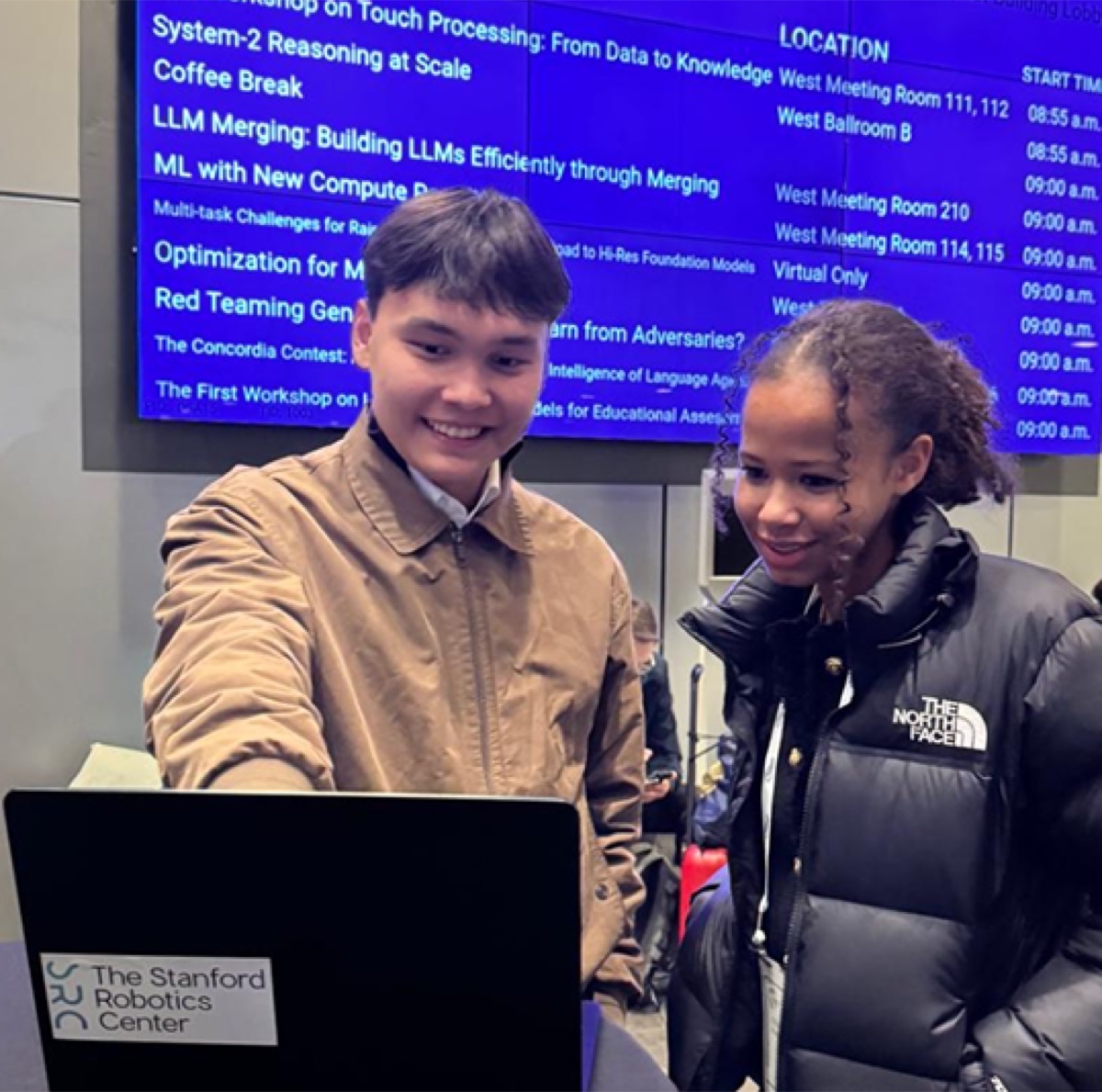
NeurIPS gets most of the attention when people talk about AI conferences. It's the largest, arguably the most well-known, and often the first conference that students and parents encounter when exploring AI research.
But NeurIPS is one conference among several that matter. If you're a student interested in AI research, understanding the broader conference landscape is important -- both because it gives you more opportunities to publish and because different conferences align better with different research interests.
This guide covers the major AI and machine learning conferences that students should know about: ICML, ICLR, AAAI, ACL, EMNLP, and CVPR. For each one, we'll cover what it focuses on, when it happens, how competitive it is, and how students can realistically participate.
Why Multiple Conferences Matter
Before diving into individual conferences, it's worth understanding why the AI community has multiple major venues rather than just one.
Each conference has a somewhat different focus, culture, and community. A paper that's a great fit for one conference might not be ideal for another. Understanding these differences helps you:
- Target the right venue for your research. A paper on natural language processing belongs at ACL or EMNLP, not CVPR. Submitting to the right venue improves your chances and connects your work to the right audience.
- Take advantage of different timelines. Conferences have different submission deadlines throughout the year. If you miss one deadline or your paper needs more time, another conference might be a few months away.
- Build a broader network. Different conferences attract somewhat different communities. Publishing at multiple venues over time expands your professional network and visibility.
At Algoverse, we target workshops at NeurIPS, ICML, and ICLR as primary venues for student research because these three have the broadest scope and the strongest reputations in machine learning. But depending on your research area, other conferences may be equally or even more appropriate.
ICML: International Conference on Machine Learning
Overview
ICML is one of the "Big Three" machine learning conferences alongside NeurIPS and ICLR. It's been running since 1984 and is widely regarded as one of the most prestigious venues for machine learning research.
While NeurIPS has a slightly broader scope that includes computational neuroscience and AI applications, ICML tends to lean more toward core machine learning methodology -- new algorithms, theoretical foundations, and advances in learning techniques.
Key Details
- Timing: Usually held in July
- Location: Rotates internationally (recent locations include Honolulu, Vienna, and Baltimore)
- Size: Approximately 5,000-6,000 attendees
- Main conference acceptance rate: Around 25-28%
- Workshops: 50-70 workshops, typically on the first and last days
What Gets Published at ICML
ICML papers tend to be technically rigorous with strong theoretical or methodological contributions. Common topics include:
- Optimization methods for machine learning
- Deep learning theory and architectures
- Probabilistic models and inference
- Reinforcement learning algorithms
- Representation learning
- Fairness, accountability, and interpretability
- Applications of ML to science and engineering
How Students Can Participate
Workshop papers are the most accessible path. ICML workshops cover a wide range of specialized topics and have their own peer review process. The expectations are calibrated for shorter papers (typically 4-6 pages), and the atmosphere is more welcoming to work-in-progress and preliminary results.
Submission timeline: Workshop calls for papers typically go out 2-3 months before the conference, with deadlines usually in April or May. This means if you're planning to submit, your research should be substantially underway by early spring.
Competitions: ICML hosts several competitions that can be good entry points for students. These typically involve optimizing for a specific benchmark or solving a well-defined challenge.
Tutorials and invited talks: Even if you don't submit a paper, ICML's tutorials are excellent educational resources on cutting-edge topics.
ICML vs. NeurIPS
The two conferences are close in prestige, and many researchers submit to both. The main practical differences for students:
- ICML is in the summer (July), while NeurIPS is in December -- this affects your research timeline
- ICML tends to be slightly more focused on core ML methods, while NeurIPS has a broader scope
- NeurIPS is larger, which means more workshops but also more competition
ICLR: International Conference on Learning Representations
Overview
ICLR is the youngest of the Big Three, founded in 2013 by Yoshua Bengio and Yann LeCun -- two of the three "Godfathers of Deep Learning" (the third being Geoffrey Hinton). Despite its relative youth, ICLR has quickly established itself as a top-tier venue, particularly for deep learning research.
ICLR is notable for being one of the first major conferences to adopt open peer review through OpenReview, where submissions and reviews are publicly visible. This transparency makes it an interesting venue for students who want to see how the peer review process actually works.
Key Details
- Timing: Usually held in May
- Location: Rotates internationally (recent locations include Kigali, Vienna, and Addis Ababa -- ICLR has intentionally held conferences in Africa to promote global participation)
- Size: Approximately 4,000-5,000 attendees
- Main conference acceptance rate: Around 30-32%
- Workshops: 30-50 workshops, typically on the last day(s)
What Gets Published at ICLR
ICLR has a strong emphasis on deep learning and representation learning, though its scope has broadened over time. Common topics include:
- Neural network architectures and training methods
- Foundation models and large language models
- Self-supervised and unsupervised learning
- Generative models (diffusion models, GANs, VAEs)
- Graph neural networks
- AI safety and robustness
- Applications of deep learning across domains
How Students Can Participate
Workshop papers follow a similar pattern to other top conferences. ICLR workshops tend to be particularly open to newer researchers and interdisciplinary work.
The open review process is uniquely educational. Even if you're not submitting, you can read submitted papers and their reviews on OpenReview. This is one of the best ways to understand what peer review looks like in practice -- what reviewers praise, what they criticize, and how authors respond.
Tiny Papers track: ICLR has experimented with a Tiny Papers track for very short contributions (2 pages). This can be an accessible entry point for students with a focused, well-executed contribution that doesn't warrant a full paper.
Submission timeline: ICLR deadlines are typically in September or October for the May conference. Workshop deadlines follow a few months later.
ICLR vs. NeurIPS and ICML
- ICLR is the most focused on deep learning specifically, while NeurIPS and ICML have broader scopes
- The open review process provides unique transparency
- ICLR is somewhat smaller, which can mean a more intimate atmosphere at workshops
- The acceptance rate for the main conference is slightly higher than NeurIPS and ICML
AAAI: Association for the Advancement of Artificial Intelligence
Overview
AAAI is one of the oldest and most established AI conferences, running since 1980. While NeurIPS, ICML, and ICLR focus heavily on machine learning, AAAI has a broader scope that includes planning, reasoning, knowledge representation, natural language processing, computer vision, and other areas of AI.
AAAI is often the conference where AI research that doesn't fit neatly into the "machine learning" box finds a home. If your project involves AI planning, constraint satisfaction, multi-agent systems, or human-AI interaction, AAAI may be a particularly good fit.
Key Details
- Timing: Usually held in February or March
- Location: Typically in North America (recent locations include Washington D.C., Vancouver, and New York)
- Size: Approximately 8,000 attendees
- Main conference acceptance rate: Around 20-25%
- Workshops: 30-40 workshops and symposia
What Gets Published at AAAI
AAAI's scope is intentionally broad. Common topics include:
- Search and planning algorithms
- Knowledge representation and reasoning
- Natural language processing
- Computer vision
- Machine learning (though with less emphasis on deep learning theory compared to ICLR)
- Multiagent systems
- AI and society
- Robotics and perception
- Game theory and economic paradigms
How Students Can Participate
Workshop and symposium papers: AAAI hosts both workshops and symposia, which are slightly more structured events. Both accept shorter papers and are accessible to students.
Undergraduate Consortium: AAAI runs a specific program for undergraduate researchers, where students present their work, receive feedback from faculty mentors, and participate in career-development activities. This is one of the most student-friendly programs at any major AI conference.
Student Abstract track: AAAI has a dedicated track for student abstracts (2-page papers) that provides a lower barrier to entry while still involving peer review. This is an excellent first publication venue for students.
AAAI conference timing is particularly convenient for students because the February deadline (usually in August) aligns well with summer research projects. If you do research over the summer, you can submit to AAAI in the fall.
AAAI vs. the Big Three
- AAAI has a broader scope beyond pure machine learning
- The Undergraduate Consortium and Student Abstract track make it uniquely accessible to students
- AAAI is generally well-regarded but considered slightly less competitive than NeurIPS, ICML, and ICLR for machine learning specifically
- The February timing fills a gap in the conference calendar
ACL: Association for Computational Linguistics
Overview
If your research focuses on natural language processing (NLP) -- anything involving text, language, speech, or linguistic analysis -- ACL is the premier venue. It's the top conference in computational linguistics and NLP, and its proceedings are among the most cited in the field.
Key Details
- Timing: Usually held in July or August
- Location: Rotates internationally
- Size: Approximately 3,000-4,000 attendees
- Main conference acceptance rate: Around 20-25%
- Workshops: 20-30 co-located workshops
What Gets Published at ACL
- Machine translation and multilingual NLP
- Sentiment analysis and opinion mining
- Question answering and information retrieval
- Text generation and summarization
- Dialogue systems and conversational AI
- Computational social science using NLP
- Linguistic analysis and typology
- Ethics and bias in NLP systems
- Large language model analysis and evaluation
How Students Can Participate
Workshop papers at ACL are strong venues for NLP research. Workshops like those focused on NLP for social good, multilingual processing, or evaluation of generative models are well-suited to student work.
Student Research Workshop (SRW): ACL hosts a dedicated Student Research Workshop that's specifically designed for students at all levels. Submissions are reviewed with pedagogical goals in mind, and accepted students receive mentorship from senior researchers. This is one of the best student-focused programs at any conference.
Submission timeline: ACL deadlines are typically in January or February for the summer conference.
Why Students Should Consider ACL
NLP is one of the most accessible areas of AI research for students because:
- Language data is abundant and often freely available
- Many NLP tasks are intuitive (summarization, translation, sentiment analysis)
- The connection between NLP research and real-world applications is direct and easy to explain
- Tools and libraries (HuggingFace, spaCy, NLTK) make getting started relatively straightforward
If your research involves language in any way, ACL should be on your radar.
EMNLP: Empirical Methods in Natural Language Processing
Overview
EMNLP is the second-most prestigious NLP conference, co-organized by ACL. As the name suggests, it emphasizes empirical approaches -- experimental results, benchmarks, and data-driven methods.
Key Details
- Timing: Usually held in October or November
- Location: Rotates internationally
- Size: Approximately 3,000-4,000 attendees
- Main conference acceptance rate: Around 22-25%
- Workshops: 15-25 co-located workshops
What Gets Published at EMNLP
Similar topics to ACL, with a stronger emphasis on:
- Empirical evaluations of NLP methods
- Benchmark development and analysis
- Large-scale experiments and comparisons
- Practical NLP applications
- Dataset creation and analysis
Why Students Should Consider EMNLP
EMNLP is particularly good for student research because its empirical focus aligns well with the kind of work students can realistically do. An empirical study that carefully evaluates an existing method on a new dataset or in a new context doesn't require inventing a novel algorithm -- it requires careful experimental design and clear analysis. This type of contribution is accessible and valued.
The October/November timing also means EMNLP deadlines (usually in June) work well for students who start research in the spring.
CVPR: Conference on Computer Vision and Pattern Recognition
Overview
If your research involves images, video, or visual data in any way, CVPR is the top venue. It's the premier conference for computer vision and is one of the most competitive conferences in all of computer science.
Key Details
- Timing: Usually held in June
- Location: Typically in North America
- Size: Approximately 9,000-10,000 attendees
- Main conference acceptance rate: Around 25%
- Workshops: 60-80 workshops and tutorials
What Gets Published at CVPR
- Object detection and recognition
- Image segmentation and generation
- Video understanding and analysis
- 3D vision and reconstruction
- Medical image analysis
- Autonomous driving perception
- Visual question answering
- Image synthesis and editing (including diffusion models)
How Students Can Participate
Workshop papers at CVPR cover a huge range of computer vision subtopics. Some workshops specifically encourage student participation and have reduced page limits.
The large number of workshops at CVPR means more opportunities for students. With 60-80 workshops, there's likely one that fits your specific research area.
Submission timeline: Main conference deadlines are usually in November, with workshop deadlines typically in March or April.
Why Students Should Consider CVPR
Computer vision is highly visual (literally), which makes it easy to demonstrate results and explain contributions. It also has strong connections to practical applications that are easy for non-experts to understand -- medical imaging, autonomous vehicles, accessibility tools. This makes computer vision research particularly effective for college applications and presentations.
Choosing the Right Conference
Here's a practical decision framework:
By Research Area
| If your research involves... | Consider... |
|---|---|
| General ML methods, theory, algorithms | NeurIPS, ICML, ICLR |
| Deep learning architectures, training | ICLR, NeurIPS, ICML |
| Natural language processing, text, chatbots | ACL, EMNLP |
| Computer vision, images, video | CVPR |
| AI planning, reasoning, knowledge | AAAI |
| AI safety, alignment, ethics | NeurIPS, ICML, ICLR, AAAI |
| Healthcare AI | NeurIPS/ICML/ICLR workshops, AAAI |
| AI for social good, education | AAAI, NeurIPS/ICML workshops |
By Timeline
| Conference | Typical Main Deadline | Workshop Deadlines | Conference Date |
|---|---|---|---|
| AAAI | August | October-November | February |
| ICLR | September-October | February-March | May |
| CVPR | November | March-April | June |
| ICML | January-February | April-May | July |
| ACL | January-February | April-May | July-August |
| EMNLP | June | August-September | October-November |
| NeurIPS | May | August-October | December |
This spread means there's almost always a relevant deadline within a few months. If you miss one conference, another is coming.
By Accessibility for Students
The most student-friendly conferences, based on dedicated student programs and accessible entry points:
- AAAI -- Undergraduate Consortium, Student Abstract track
- ACL -- Student Research Workshop with mentorship
- NeurIPS -- Large number of workshops, volunteer program
- ICML -- Workshops, competitions
- ICLR -- Open review process, Tiny Papers track
- EMNLP -- Empirical focus aligns with student capabilities
- CVPR -- Many workshops, but highly competitive
Workshop Papers vs. Main Conference
For students, workshop papers at any of these conferences are the realistic target. Here's why:
Main conference papers require substantial, novel contributions that advance the state of the art. They're typically 8-10 pages, go through rigorous review by 3-5 reviewers, and have acceptance rates of 20-30%. Even experienced PhD students don't always get main conference papers accepted.
Workshop papers are shorter (4-6 pages), focus on more specialized topics, and are evaluated with an understanding that the work may be preliminary or in progress. Acceptance rates are generally higher (30-60%), and the review process, while rigorous, is calibrated for the format.
A workshop paper at NeurIPS, ICML, ICLR, AAAI, ACL, EMNLP, or CVPR is a genuine peer-reviewed publication. It appears in the workshop proceedings, it's indexed in academic databases, and it demonstrates that your work met the standards of expert reviewers at a top venue. For a student, that's an exceptional achievement.
Making the Most of Conference Participation
If your paper is accepted, the conference itself is a significant opportunity. Here's how to make the most of it:
Prepare Your Presentation
Whether you're giving a poster presentation or a short talk, preparation matters. Practice explaining your work to people at different levels of expertise -- from fellow researchers in your area to people from entirely different subfields. The ability to adjust your explanation for your audience is a valuable skill.
Network Intentionally
Conferences are where the AI community comes together. Attend talks and poster sessions in your area of interest. Ask questions. Introduce yourself to researchers whose work you've read. These connections can lead to mentorship, collaboration, and future opportunities.
Attend Broadly
Don't just go to sessions in your narrow area. Some of the most interesting research insights come from unexpected connections between subfields. Attend a tutorial on a topic you know nothing about. Look at posters in areas outside your expertise. Cross-pollination is one of the main values of attending a conference in person.
Take Notes
You'll see dozens of talks and hundreds of posters. Record what you found interesting, what sparked new ideas, and who you want to follow up with. A week after the conference, your memories will be fuzzy; notes will preserve the value of the experience.
Frequently Asked Questions
Can I submit the same paper to multiple conferences?
No. Virtually all major AI conferences have policies against simultaneous submissions. You submit to one venue at a time. If your paper is rejected, you can revise it and submit to a different conference. This is common and expected -- many eventually-published papers were rejected from their first submission venue. The spread of conference deadlines throughout the year means there is almost always another opportunity a few months away.
How competitive are workshops at these conferences?
Workshop acceptance rates at NeurIPS, ICML, and ICLR generally range from 30-50%, drawing submissions from a competitive pool that includes PhD students, postdocs, and industry professionals. Algoverse students have achieved a 68-73% acceptance rate across these workshops -- significantly above average -- because the program strategically matches papers to well-fitting workshops and provides mentorship from PIs who understand what reviewers at these venues expect.
Do admissions officers and employers recognize the difference between these conferences?
Yes. At research universities, admissions committees often include faculty who know these venues well. A publication at NeurIPS, ICML, ICLR, AAAI, ACL, or CVPR is recognized as a strong achievement by both graduate school admissions and industry hiring managers at labs like Google DeepMind, Meta FAIR, and OpenAI. Your research mentor's recommendation letter can further contextualize the significance.
Which conference should I target for my first paper?
Submit to the conference that is the best fit for your research topic, not the one you think is easiest. A paper on NLP belongs at ACL or EMNLP, not CVPR. A paper on fairness or safety fits well at NeurIPS, ICML, or AAAI workshops. Algoverse targets workshops at NeurIPS, ICML, ICLR, ACL, and EMNLP and helps students identify the best-fit venue for their specific research.
Do I need prior research experience to publish at one of these conferences?
No prior publications are required to submit to any of these conferences. Many accepted workshop papers are their authors' first peer-reviewed publications. What matters is the quality of the research, rigorous experiments, and clear writing. Algoverse's 12-week program is specifically designed to take students from idea to submittable paper in approximately 3 months, with mentorship from PIs who have published extensively at these venues.
Related Articles
NeurIPS 2025 Recap: What Students Published This Year
A recap of NeurIPS 2025 student papers, from workshop trends to standout results. What 230 students published and what it means for future conferences.
AI Research Programs for High School Students: A Complete Guide [2026]
A comprehensive guide to AI research programs for high school students in 2026. Compare 8 programs by conference targets, mentorship, pricing, and publication outcomes.
Algoverse vs Veritas AI vs Polygence vs Inspirit AI: Which AI Research Program is Right for You?
An honest comparison of Algoverse, Veritas AI, Polygence, and Inspirit AI. Compare pricing, publication outcomes, mentorship, and program fit.