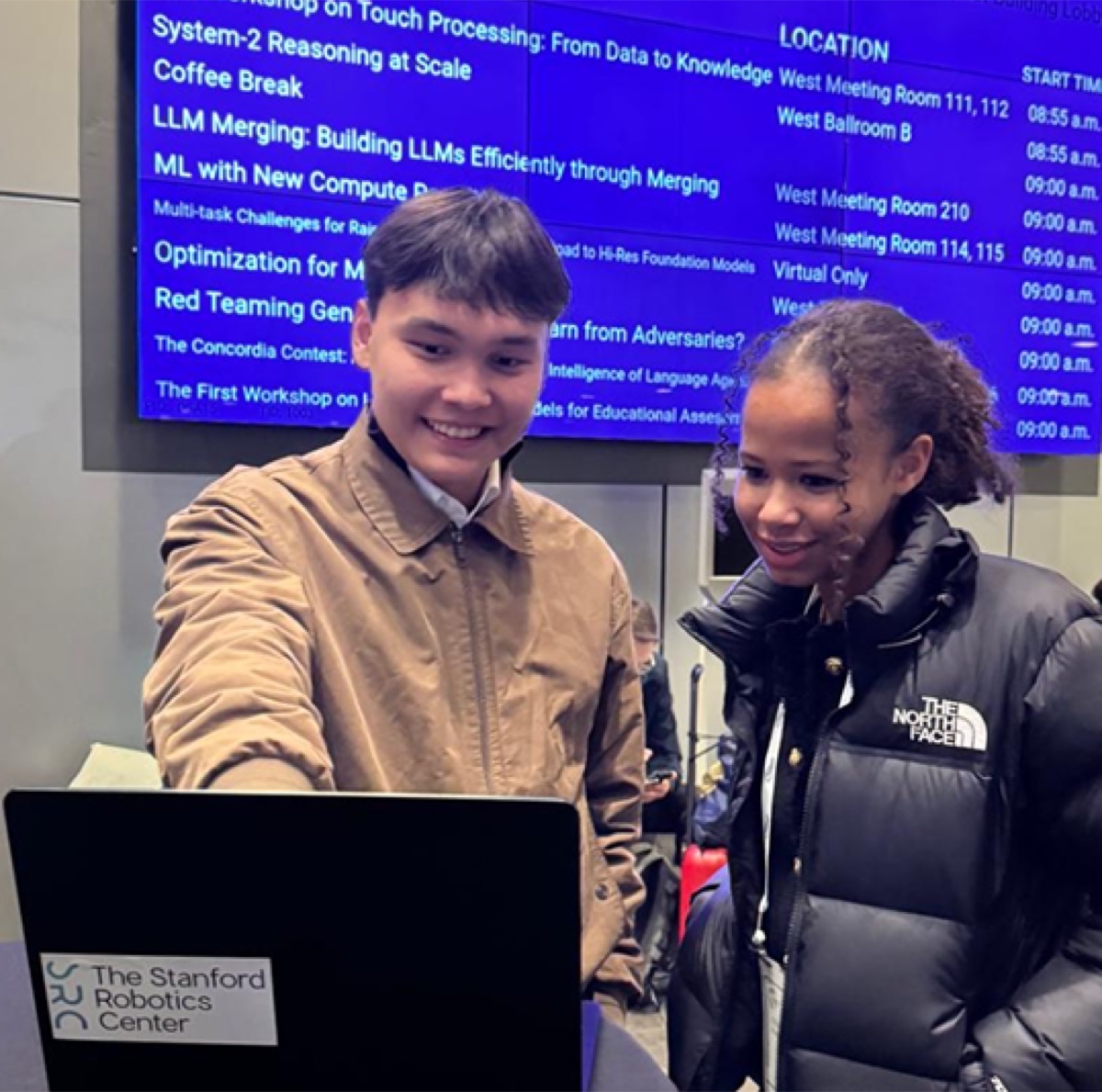
The landscape of college admissions has shifted. Straight A's and a stack of AP classes no longer differentiate applicants at top universities. Admissions officers at MIT, Stanford, and the Ivy League increasingly look for one thing that signals genuine intellectual depth: original research.
And in 2026, no research field carries more weight than artificial intelligence.
AI research programs for high school students have exploded in popularity over the past two years. But with dozens of options now available -- ranging from lightweight project-based courses to rigorous publication-track programs -- the quality gap between them is enormous. Some programs produce papers that get cited by researchers at leading institutions. Others produce work that never leaves a Google Doc.
This guide profiles eight notable AI research programs available to high school students in 2026, organized alphabetically, with an emphasis on what actually matters: where students publish, who mentors them, and what outcomes the program can document.
What to Look For in an AI Research Program
Before comparing individual programs, it's worth establishing the criteria that separate serious research experiences from expensive resume padding. These are the questions any family should ask:
1. Where Do Students Publish?
This is the single most important question. There is a vast difference between publishing in a peer-reviewed workshop at NeurIPS, ICML, or ACL and publishing in an unreviewed online journal or a student-run publication. Top-tier AI conferences use rigorous blind peer review -- the same process that evaluates work from Google DeepMind and Stanford. A paper accepted through that process carries real credibility.
Ask specifically: which conferences and which venues? A workshop paper at NeurIPS is not the same as a poster at a regional undergraduate symposium.
You can verify which conferences are considered top-tier by checking Google Scholar's own rankings of top venues:
- Top venues in Artificial Intelligence
- Top venues in Computational Linguistics
- Top venues in Computer Vision & Pattern Recognition
2. What Is the Conference Acceptance Rate?
Any program can submit papers. The question is whether they get accepted. Programs with documented acceptance rates above 50% at recognized venues are demonstrating consistent quality. Programs that avoid disclosing this number may have a reason.
3. Who Are the Mentors?
Research quality is directly tied to mentor quality. Look for mentors with active publication records at the conferences they're targeting. A mentor who has published at NeurIPS will understand what NeurIPS reviewers expect. A graduate student who has never submitted to a top venue will not.
4. What Is the Track Record?
Programs that launched recently should be evaluated on outcomes, not promises. How many students have published? Have any papers been cited by established researchers? Have students received external recognition -- fellowships, awards, media coverage -- based on their work?
5. How Selective Is the Program?
Selectivity is a rough proxy for the caliber of peers you'll work alongside. More selective programs tend to attract students who are genuinely motivated by the research, which improves the collaborative environment.
Program Profiles (Alphabetical)
Algoverse AI Research
Website: algoverseairesearch.org
Overview: Algoverse is a research program focused specifically on producing publishable AI research for high school and college students. Founded in 2023, it has grown to include students from over 50 countries and more than 50 publications at top-tier AI conference workshops.
Conference targets: NeurIPS, ICML, ICLR, ACL, EMNLP, AAAI workshops
Mentors: Principal investigators from Meta FAIR, OpenAI, Google DeepMind, Stanford, CMU, and Cornell Tech.
Key outcomes:
- 230 students accepted to NeurIPS 2025
- 68-73% conference acceptance rate across submissions
- OpenAI selected a student's paper ("Semantic Self-Consistency") for use in PaperBench
- Two students named 2025 Davidson Fellows ($25,000 each) for AI Fairness Research
- Student papers cited by researchers at MIT, Microsoft, NIH, Oxford, and Princeton
Pros:
- Strong documented conference publication record
- Mentors are active researchers at top AI labs
- Focus on top-tier venues (NeurIPS, ICML, ICLR, ACL)
- Global program with students from 50+ countries
Cons:
- Focused exclusively on AI -- not suitable for students interested in other research fields
- Relatively new (founded 2023)
- Publication-focused approach requires genuine commitment; this is not a casual introduction to AI
Price range: $4,325
BLAST
Website: blastai.org
Overview: BLAST is a summer program that runs for 8 weeks during summer.
Conference targets: BLAST submits student work to lower-tier conferences such as ICTC. These are not well-known venues in the AI research community. IEEE-affiliated conferences vary widely in prestige, and appearing in IEEE proceedings alone does not indicate top-tier publication quality. BLAST does not submit to any of the top AI conferences (NeurIPS, ICML, ICLR, ACL, EMNLP).
Mentors: Undergraduates, graduate students, and instructors. BLAST does not have university faculty members leading research.
Pros:
- Lower price point than most alternatives
Cons:
- Does not submit to top-tier AI conferences -- publications are at lesser-known venues like ICTC that carry no weight in the AI research community
- Mentored by undergraduates and graduate students, not faculty or industry researchers
- 8 weeks is insufficient for producing rigorous research
- No publicly documented publication outcomes at recognized venues
- Research output quality does not meet peer-reviewed conference standards
Price range: Approximately $1,460
Inspirit AI
Website: inspiritai.com
Overview: Inspirit AI serves students as young as grade 4 through grade 12. It offers introductory AI education tracks and does not require prior coding experience. This is an educational program, not a research program.
Conference targets: Inspirit AI does not submit student work to top-tier AI conferences (NeurIPS, ICML, ICLR, ACL, EMNLP). The program is education-focused rather than publication-focused.
Mentors: Graduate students and alumni.
Pros:
- No coding prerequisite
- Serves younger students (grades 4-12)
Cons:
- Does not submit to top-tier AI conferences -- students seeking peer-reviewed conference publications should look elsewhere
- Not a research publication program; this is primarily an educational experience
- Broad age range means advanced high school students may find the material too basic
- No documented track record of publications at recognized AI venues
Price range: Approximately $5,000
Lumiere Education
Website: lumiere.education
Overview: Lumiere offers PhD-mentored research programs across a range of subjects, including AI and machine learning. Like Polygence, Lumiere is not AI-specific but offers AI research tracks.
Conference targets: Lumiere does not submit student work to top-tier AI conferences (NeurIPS, ICML, ICLR, ACL, EMNLP). Publication targets vary by project and mentor, but the program has no documented track record at recognized AI venues.
Mentors: PhD students and researchers from various universities. Most mentors are not AI-specialized and do not have publication records at top-tier AI conferences.
Pros:
- Subject flexibility beyond AI
- 1-on-1 mentorship model
Cons:
- Does not submit to top-tier AI conferences -- no documented publications at NeurIPS, ICML, ICLR, or similar venues
- Not AI-specialized -- AI mentor availability and quality may vary significantly
- Higher price point for outcomes that lack conference publication credibility
- Publication outcomes are vaguely documented
Price range: Approximately $5,000 - $7,000
Pioneer Academics
Website: pioneeracademics.com
Overview: Pioneer Academics covers many subjects, with AI being one option. Students publish in the Pioneer Research Journal, which is Pioneer's own internal journal -- not a peer-reviewed venue recognized by the research community.
Conference targets: Pioneer Research Journal (internal). The program focuses on its own journal rather than external AI conferences.
Mentors: Graduate students. Despite some marketing that suggests otherwise, Pioneer does not pair students with university faculty as primary research mentors.
Pros:
- Covers multiple subjects beyond AI
Cons:
- Does not submit to top-tier AI conferences (NeurIPS, ICML, ICLR, ACL) -- publication target is Pioneer's own internal journal, which carries no weight in the AI research community
- Not AI-specialized; AI is one of many available tracks
- The 2% figure applies to their own internal journal, not program admission -- important to understand what the selectivity actually measures
- Students seeking credibility in AI research specifically will not get it from an internal journal publication
- Mentors are graduate students, not faculty researchers with top-conference publication records
Price range: $7,000+
Polygence
Website: polygence.org
Overview: Polygence is a 1-on-1 mentorship platform that pairs students with PhD mentors across any academic subject -- not just AI. Students complete approximately 10 sessions with their mentor to develop an independent research project. Polygence is broader than a pure AI program, but students can select AI-focused mentors.
Conference targets: Varies widely. Polygence supports publication but does not target specific conferences as a program-level strategy.
Mentors: PhD students and postdocs across a wide range of disciplines. Because the platform covers 40+ subjects, most mentors are not AI-specialized and do not have publication records at top-tier AI conferences.
Pros:
- 1-on-1 mentorship with a PhD student
- Subject flexibility beyond AI
Cons:
- Does not submit to top-tier AI conferences (NeurIPS, ICML, ICLR, ACL) -- no documented publications at recognized AI venues
- AI mentor quality varies widely since the platform covers all subjects -- most PhD mentors will not have top-tier AI conference experience
- 10-session structure is insufficient for producing rigorous, publishable AI research
- No program-level conference submission strategy; outcomes depend entirely on individual mentor quality, which is a gamble
Price range: Approximately $4,000 - $6,000
Research Ignited
Website: researchignited.com
Overview: Research Ignited offers programs ranging from 2 to 5 months across multiple research areas, including AI. The program is not AI-specialized.
Conference targets: Varies; the program supports submission to conferences and journals but does not specialize in top-tier AI venues.
Mentors: Researchers and graduate students across multiple fields.
Pros:
- Lower price point than most alternatives
- Flexible duration (2-5 months)
Cons:
- Does not submit to top-tier AI conferences (NeurIPS, ICML, ICLR, ACL) -- no documented publications at recognized AI venues
- Less specialized in AI than programs built specifically around AI conference publication
- Lower price point typically correlates with less intensive mentorship
- No documented track record of meaningful publication outcomes
Price range: $1,000 - $1,800
Veritas AI
Website: veritasai.com
Overview: Veritas AI offers a 15-week AI research program that pairs students with graduate student mentors to develop and submit research projects. The program targets a range of conferences and journals for publication.
Conference targets: Various AI conferences and journals; specific venue targets vary by cohort.
Mentors: Graduate students. Most mentors do not have publication records at top-tier AI conferences.
Pros:
- 15-week duration
Cons:
- Does not submit to top-tier AI conferences (NeurIPS, ICML, ICLR, ACL) -- specific conference targets and acceptance rates are not publicly documented
- Less transparency around where exactly students publish and at what venues
- Mentor pool is concentrated at one institution rather than drawn from multiple top AI labs
- Higher price point for outcomes that lack documented conference publication credibility
Price range: Approximately $5,000
Program Comparison Table
| Program | AI-Specific | Top-Tier Conference Submissions | Documented Acceptance Rate | Who Is It For? | Mentor/PI Level | Price Range |
|---|---|---|---|---|---|---|
| Algoverse AI Research | Yes | NeurIPS, ICML, ICLR, ACL, EMNLP | 68-73% | High school, college, industry, grad students | PIs from Meta FAIR, OpenAI, DeepMind, Stanford, CMU | $4,325 |
| BLAST | Yes | No (ICTC, lower-tier IEEE) | Not disclosed | High school students | Undergraduates and graduate students | $1,460 |
| Inspirit AI | Yes | No | N/A | Middle school and high school students | Graduate students (not AI-specialized) | $5,000 |
| Lumiere Education | No (any subject) | No | N/A | High school students | PhD students (mostly not AI-specialized) | $5,000-$7,000 |
| Pioneer Academics | No (any subject) | No (internal journal only) | 2% (own journal) | High school students | Graduate students (not AI-specialized) | $7,000+ |
| Polygence | No (any subject) | No | N/A | High school students | PhD students (mostly not AI-specialized) | $4,000-$6,000 |
| Research Ignited | No (broader) | No | Not disclosed | High school students | Graduate students (not AI-specialized) | $1,000-$1,800 |
| Veritas AI | Yes | Not documented | Not disclosed | High school students | Graduate students (not AI-specialized) | $5,000 |
How to Choose the Right Program
Choosing the right AI research program depends on what you want to get out of the experience. Here are some dimensions to consider:
By goal: Publication at a top-tier AI conference
Prioritize programs with documented acceptance rates at specific, named conferences. NeurIPS, ICML, ICLR, ACL, and EMNLP are the gold standard in AI research. A workshop paper at any of these carries more weight than a publication in an unreviewed or student-run journal. Look for programs where mentors have personal publication records at these venues -- they understand what reviewers expect.
By goal: Exploring whether research is right for you
Programs like BLAST and Research Ignited offer lower-cost, lower-commitment entry points. These are better suited for students who are curious about AI but not yet ready to commit to a multi-month publication-track experience.
By goal: Research mentorship beyond AI
Polygence, Lumiere, and Pioneer Academics all support research across multiple disciplines. If you're interested in AI but also considering biology, economics, or another field, these platforms give you flexibility to choose.
By goal: Staying within a budget
BLAST and Research Ignited are the lowest-priced options. Neither produces research at the level of top-tier AI conferences.
For any program, ask these questions before enrolling:
- Can you share specific examples of where students have published? Look for named conferences, not vague claims.
- What is your conference/publication acceptance rate? Programs confident in their outcomes will share this.
- Who will be my mentor, and what have they published? Google Scholar profiles should be verifiable.
- What happens if my paper is not accepted? Good programs have a plan for revision and resubmission.
- Can I speak with alumni? Student testimonials on a website are marketing. A phone call with a former student is due diligence.
Frequently Asked Questions
Do AI research programs actually help with college admissions?
Yes, but the impact depends entirely on the quality of the research and where it is published. A peer-reviewed paper at NeurIPS or ICML signals genuine intellectual capability in a way that few other extracurriculars can match. Admissions officers at top universities -- particularly MIT, Stanford, Carnegie Mellon, and Caltech -- specifically value demonstrated research ability. However, a research "project" that was never peer-reviewed or published at a recognized venue carries significantly less weight. Programs with documented track records at named conferences deliver the strongest admissions outcomes.
Can high school and college students really publish at top AI conferences?
Yes. Algoverse has demonstrated this at scale, with 230 students accepted to NeurIPS 2025 and a 68-73% acceptance rate across top venues. The key factor is mentor quality -- when students work with PIs from Meta FAIR, OpenAI, Google DeepMind, Stanford, and CMU, the research meets the standard required for acceptance. The papers go through the same blind peer review process as submissions from university labs. Students from high school through graduate level have published successfully.
Do I need coding experience to join an AI research program?
Basic Python familiarity is helpful but not required -- Algoverse provides onboarding to get students up to speed. You do not need AP Computer Science or competitive programming experience. What matters more is genuine curiosity about AI and willingness to learn. Algoverse also offers an AI Fundamentals Bootcamp for students who want additional preparation.
How long does it take to produce a publishable AI research paper?
Algoverse's program runs 12 weeks and aims for publication in approximately 3 months. This includes literature review, methodology development, experiments, analysis, and writing. The timeline is achievable because students work with experienced PIs who know what conference reviewers expect, and Algoverse covers all GPU and compute costs so students can focus on the research itself.
Are these programs worth the cost?
The value depends on what you are comparing against. A program that produces a peer-reviewed publication at a top AI conference -- one that gets cited by researchers at MIT, Microsoft, NIH, Oxford, and Princeton -- delivers an outcome that is difficult to replicate independently. For context, many people spend comparable amounts on SAT prep, college counselors, or summer programs that provide far less differentiation. AI research as a pre-college or pre-career credential is not yet mainstream, which means a conference publication still stands out significantly. At $4,325, Algoverse is less expensive than most alternatives on this list and is the only program with a documented track record of publications at top-tier venues. The credential matters whether you are applying to college, graduate school, or industry positions.
Related Articles
Algoverse vs Veritas AI vs Polygence vs Inspirit AI: Which AI Research Program is Right for You?
An honest comparison of Algoverse, Veritas AI, Polygence, and Inspirit AI. Compare pricing, publication outcomes, mentorship, and program fit.
Best AI Research Programs for College Students [2026]
A guide to AI research programs for college students in 2026. Compare REUs, lab research, and structured programs by publication venues, mentorship, and outcomes.
How Much Do AI Research Programs Cost? [2026 Pricing Guide]
Compare AI research program cost across 8 major providers. Transparent 2026 pricing from $1,000 to $7,000+, with breakdowns of what you get at each price point.