Algoverse Research Team
Deadline for the November 1 cohort: Sunday, November 1 at 11:59pm PT
The leading AI research program for students and professionals to publish at the world's top AI conferences.




Work with faculty to identify high-impact research questions in AI, machine learning, and related fields that address real-world challenges.
Conduct original research with rigorous methodology, experimental validation, and peer collaboration to develop novel insights and solutions.
Write and submit publication-ready papers to premier AI venues like NeurIPS, ICML, ICLR, and EMNLP, with guidance through the full peer review process.
Tier 1 AI conferences
Tier 1 conferences are the top-ranked venues in each area of AI. Google Scholar ranks each of these among the top three in its field.
NeurIPS
ACL
CVPR
ICLR
EMNLP
ECCV
ICML
NAACL
ICCV
Publishes at NeurIPS, with more than 175 papers in 2025. Google at NeurIPS 2025
Publishes at ICLR, ACL, EMNLP and NeurIPS. Stanford NLP publications
Publishes at EMNLP, NAACL and ACL. Berkeley NLP publications
Rank by citations to the last five years of papers (h5-index). Source: Google Scholar Metrics, Artificial Intelligence, Computational Linguistics and Computer Vision & Pattern Recognition lists, retrieved October 2026.
Algoverse research teams have consistently achieved publication success at top AI venues such as NeurIPS, EMNLP, and ACL—conferences that primarily feature work from Ph.D. students and professional researchers at leading industry and academic labs. Acceptance rates at top conferences and workshops are typically 30–50% for submissions from established research institutions. Algoverse's research teams have significantly exceeded the baseline results, reflecting the program's emphasis on rigorous mentorship and research quality.
To read more about our research outcomes and conference publications, visit our Research page.
68%
Conference-accepted teams70%
Conference-accepted teams73%
Conference-accepted teams73%
Conference-accepted teamsAbhay and Philip were honored with the highly selective Davidson Fellows Scholarship, receiving a $25,000 scholarship for their research. They were 1 of 20 recipients selected from 1,200+ applicants, recognized for their exceptional research and impact.
Their paper, EnDive, was accepted to EMNLP Findings, one of the flagship conferences in NLP. Furthermore their work was cited by researchers at Microsoft, Google, Stanford, Carnegie Mellon, Columbia, Oxford, the University of Washington, and other institutions.
After Algoverse, Philip was admitted to Harvard University.
After Algoverse, Abhay has acquired internships at Stanford, MIT, and Harvard (Reference: LinkedIn), despite coming into the program with no prior experience in AI or research.
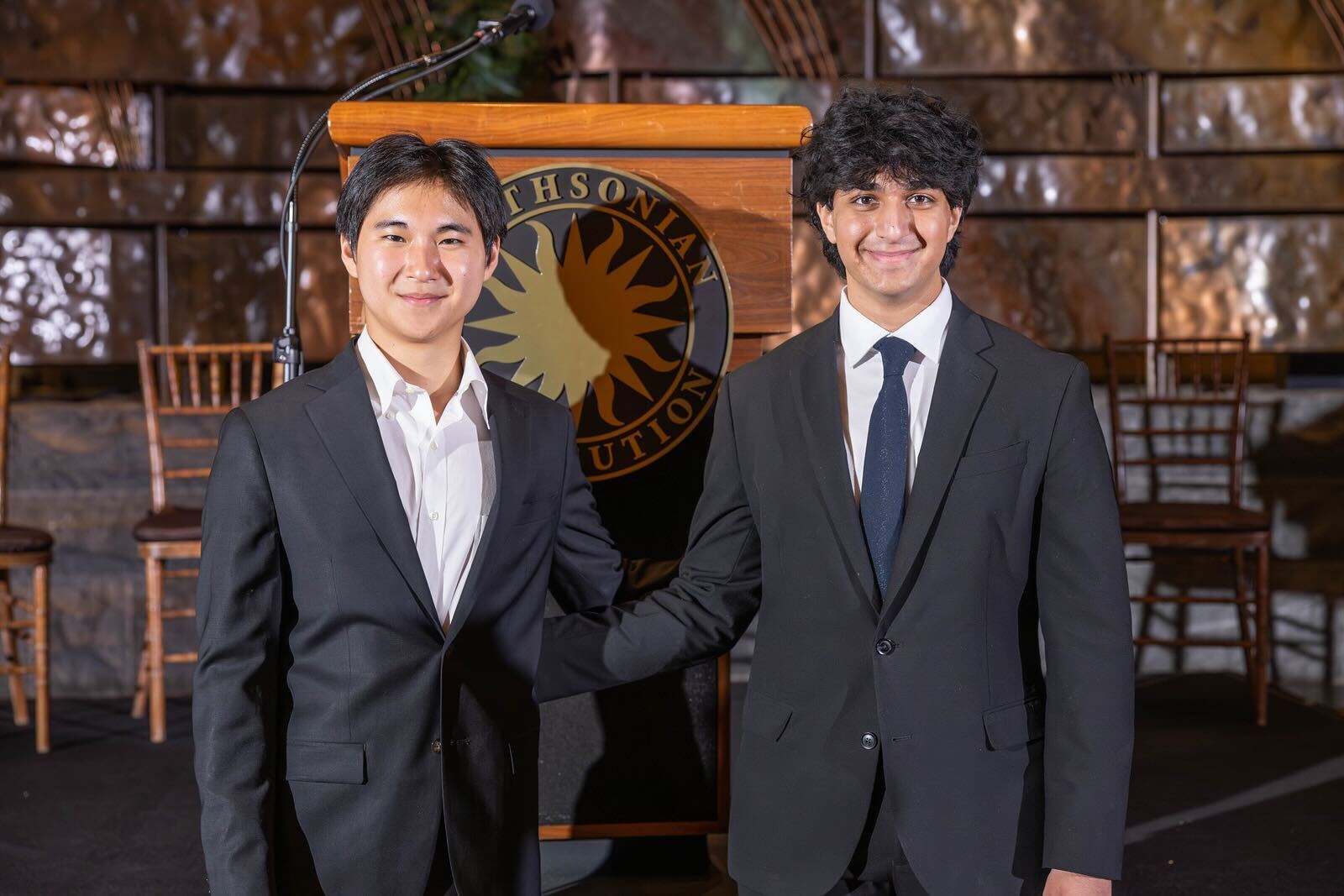
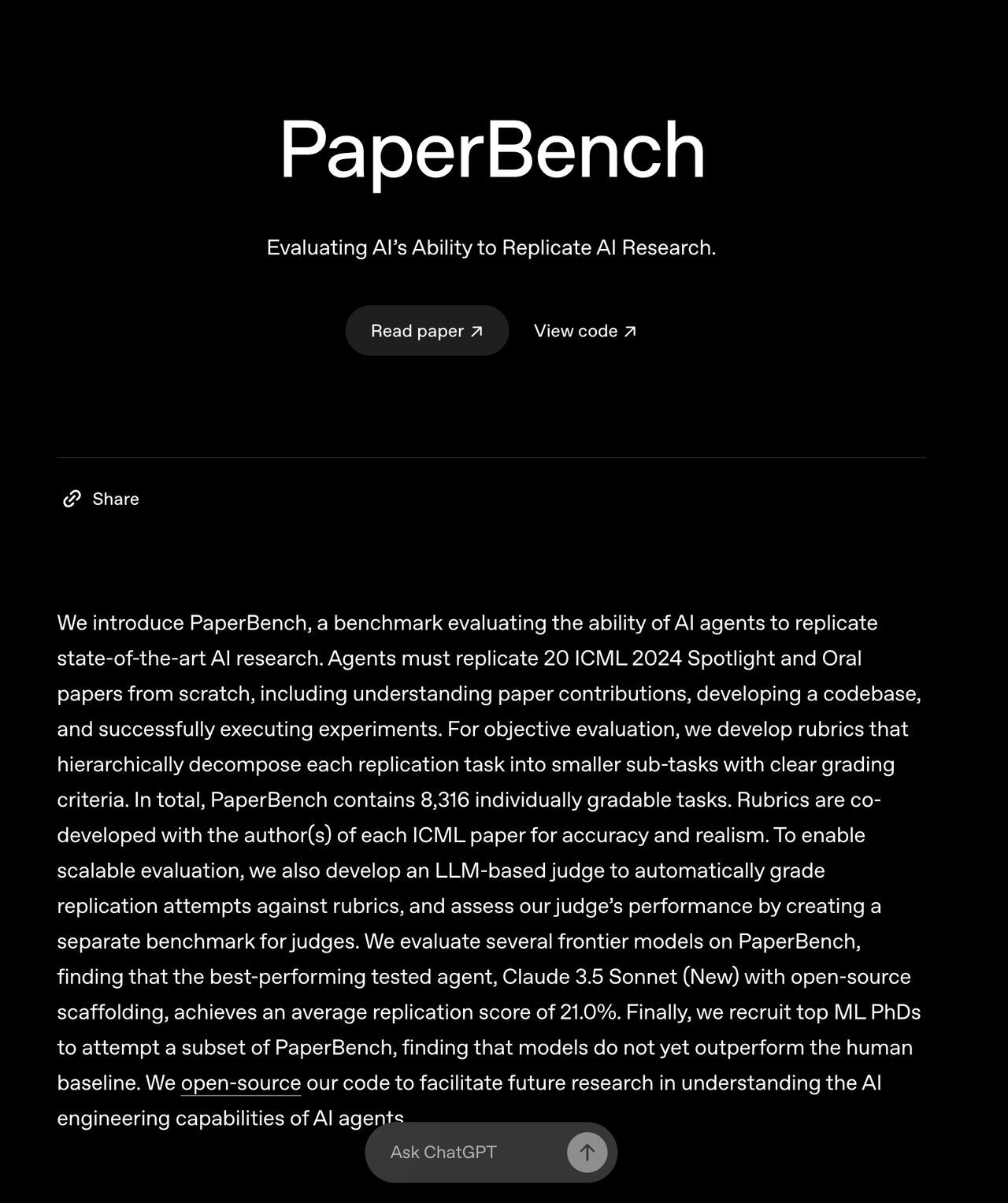
In an outstanding recognition of their cutting-edge work, their paper, Semantic Self-Consistency was featured among 20 state-of-the-art AI research papers in OpenAI's PaperBench. OpenAI handpicked these 20 papers from ICML and NeurIPS and reached out to collaborate with our student author, Tim.
Earlier, their paper was also accepted at NeurIPS MATH-AI. Notably, after their NeurIPS presentation, two of the four researchers were admitted to Stanford University.*
*The other two researchers were 1: already accepted to college at the time they joined the project and 2: based in Germany.
Hear from students who have published research through our program
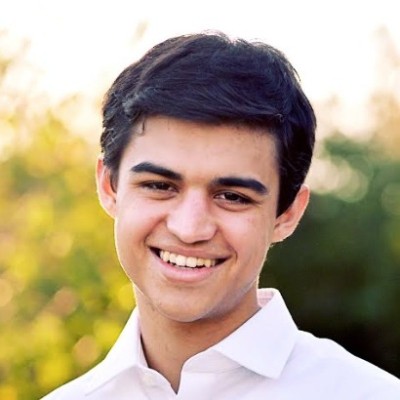
McNair Shah
“Algoverse is a great program; the mentors and many of the students in it are incredibly talented. Kevin Zhu is a great program director who's been able to make the program an actual incubator for future researchers that is starkly different from a lot of other programs!”
McNair's AI safety research at Algoverse was accepted to the NeurIPS 2025 Mechanistic Interpretability Workshop, contributing to his selection for the Anthropic AI Safety Fellowship.
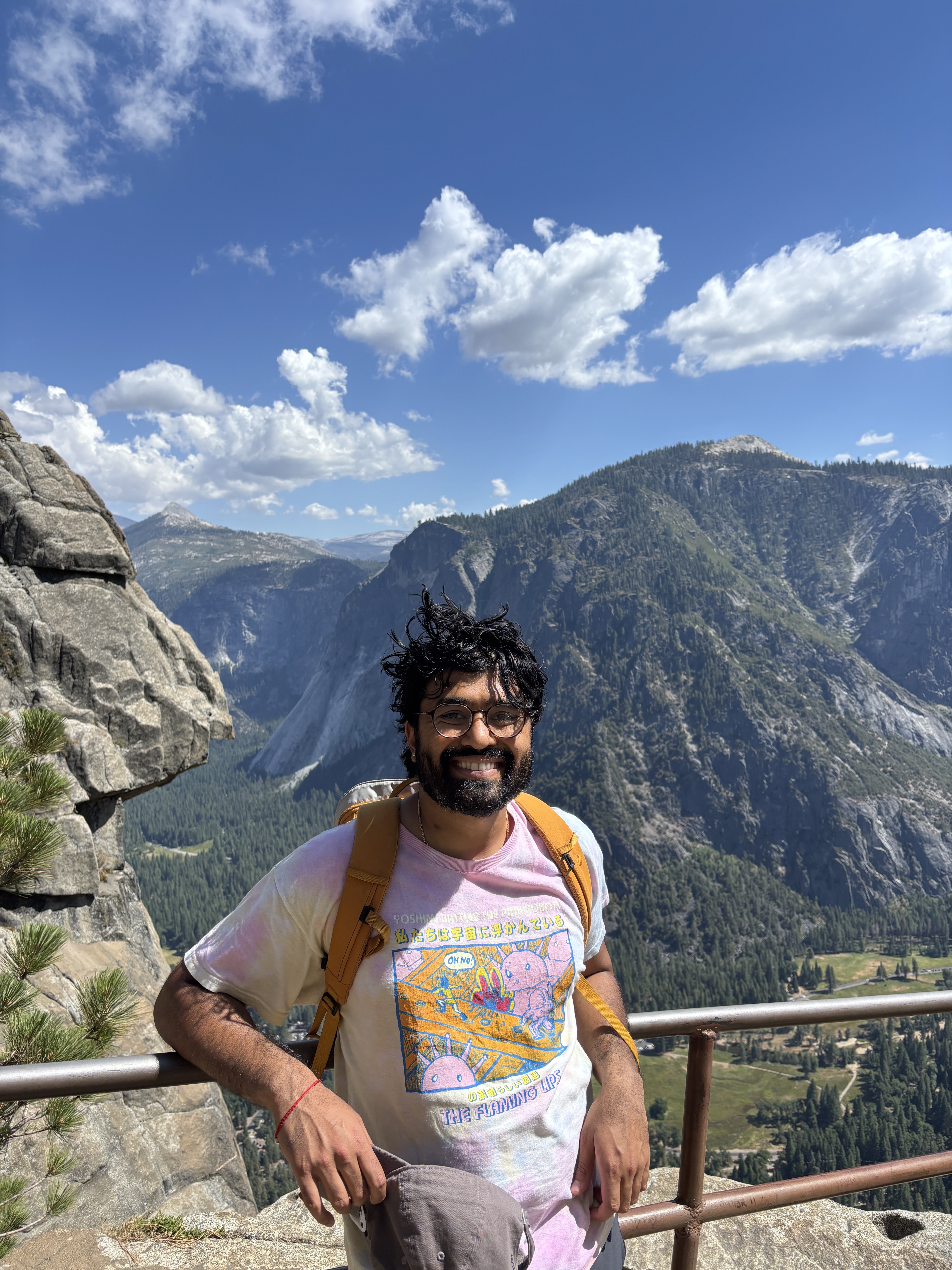
Srivishnu Ramamurthi
“Algoverse provided the technical foundations I was missing and the "hidden" knowledge around how research actually works — which conferences matter, how peer review works, and how to meet real research standards. It gave me the structure to take my first steps as a researcher.”
Srivishnu's Algoverse research was accepted to the NeurIPS 2025 Efficient Reasoning Workshop, helping strengthen the track record that led to his full-time software engineer offer from OpenAI.
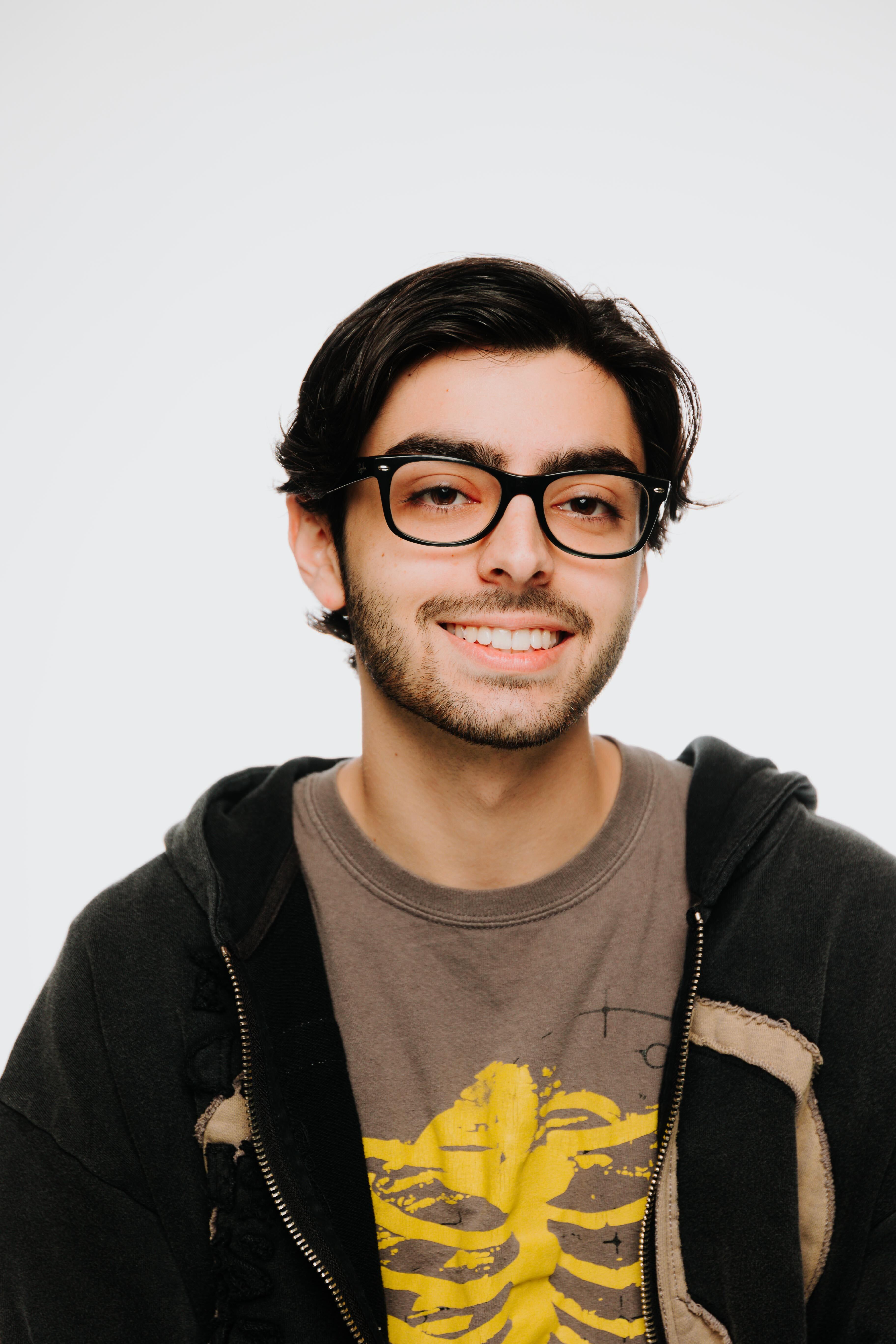
Sam Mikhak
“Algoverse gave me a rare opportunity to pursue my own research interests while taking full ownership of the process. I was able to lead my work independently, with guidance from industry professionals and PhD mentors who helped refine my direction and approach. My research focused on matrix product operator (MPO) based neural network compression, which aligned closely with my interest in building efficient machine learning systems. This work resulted in a publication and opened opportunities that would not have otherwise been available to me.”
Sam's research on matrix product operator (MPO) based neural network compression was accepted to an ICLR workshop. He subsequently transferred from community college to Columbia University.
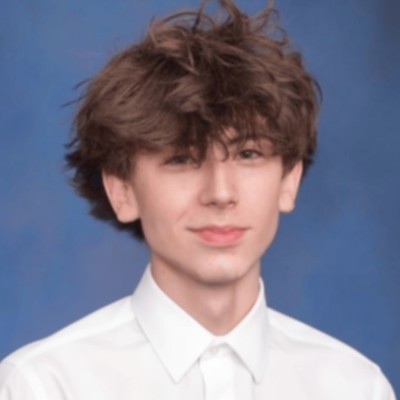
Max Manolov
“Algoverse taught me how to turn a research idea into something publishable. From designing a benchmark to writing results that hold up to peer review, my work made a meaningful contribution to the field. It gave me the foundation I needed to pursue research at Stanford.”
Through Algoverse, Max designed a benchmark and wrote up peer-review-ready results, building the research foundation he needed to pursue research at Stanford.
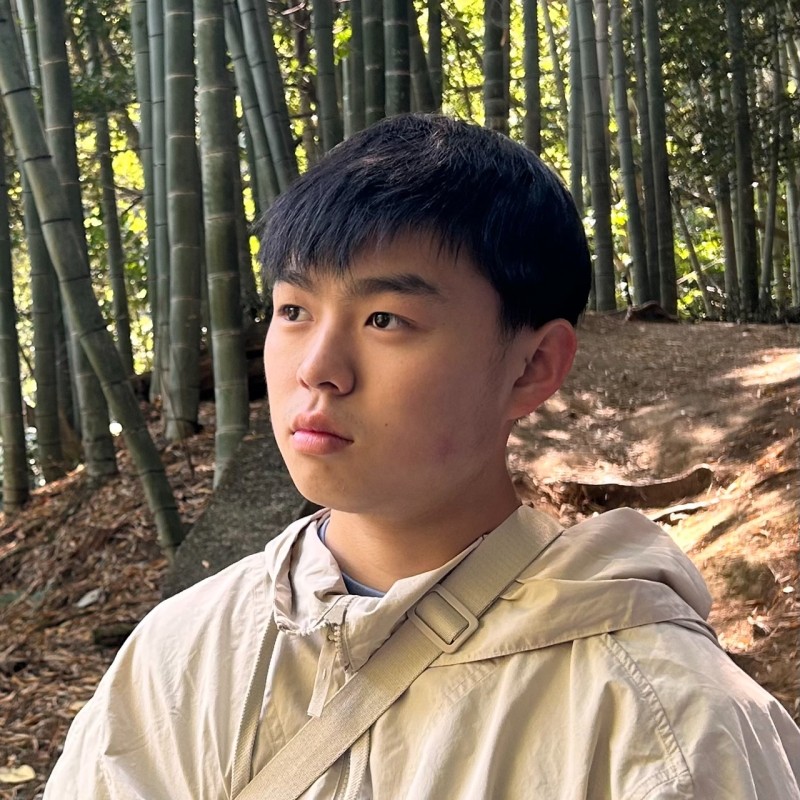
Ryan Li
“The lectures, notebooks, and mentorship were actual industry-level quality, and really put into perspective how legit research looks compared to my old stuff. I feel way more confident about paper-reading, writing, and running actual experiments after all this, and seeing the paper finally get accepted was super rewarding… The program was genuinely the highest ROI thing I've done in my entire high school career.”
Through Algoverse, Ryan earned a NeurIPS workshop acceptance, was featured by OpenAI, and was admitted to Stanford.
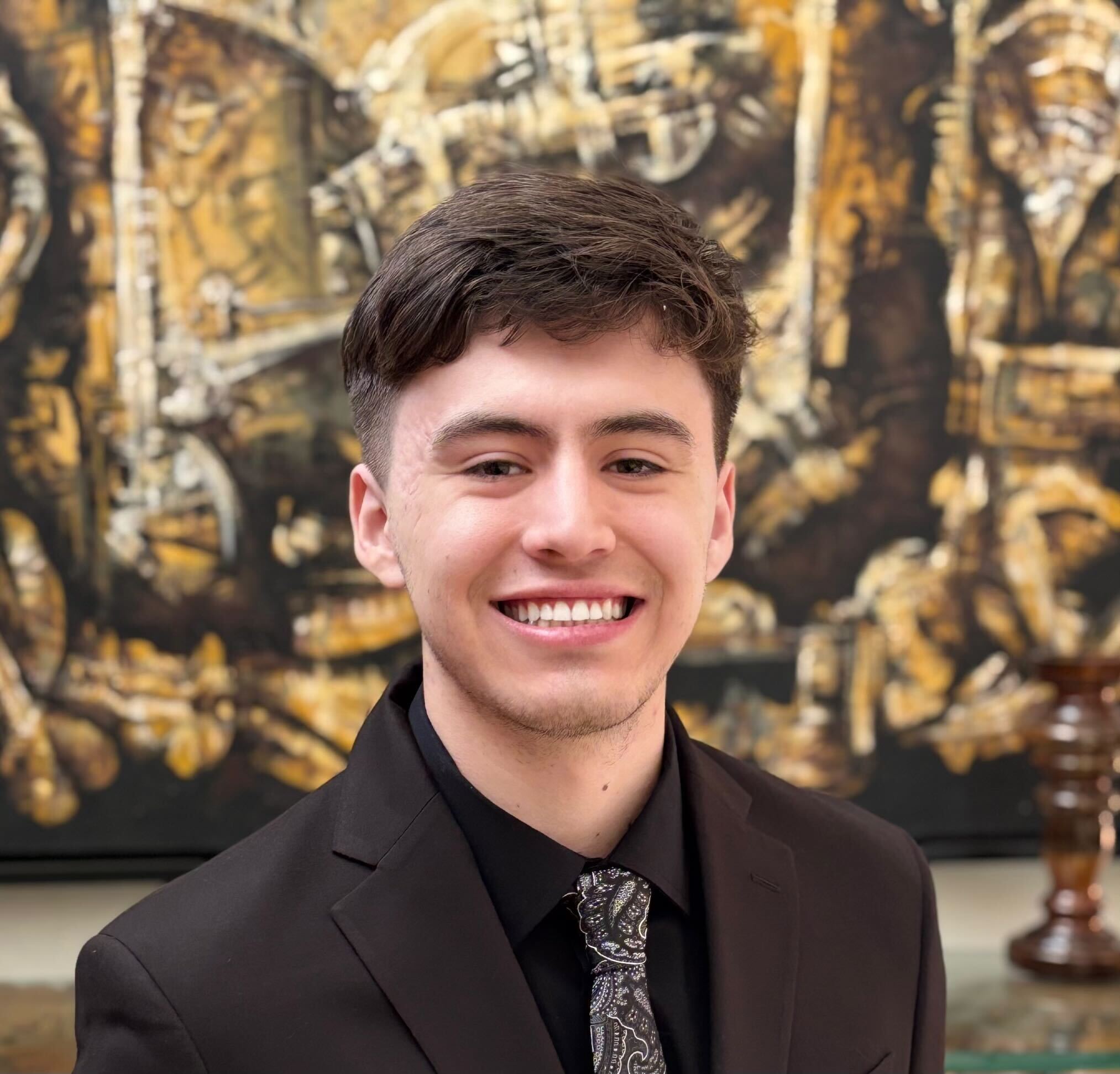
Santiago Torres-Garcia
“Algoverse offered an incredible opportunity minimally available to community college students. The research experience I gained strengthened my UC application, contributing to my acceptance into UC Berkeley's EECS program as a transfer student, a lifelong dream of mine. Our paper was accepted into ACL's REALM'25 Workshop, a prestigious peer-reviewed venue in the field of NLP. This will help me stand out as I pursue research roles, internships, and job opportunities.”
Santiago highlighted his Algoverse research accepted at an ACL workshop in his UC Berkeley transfer application from community college.
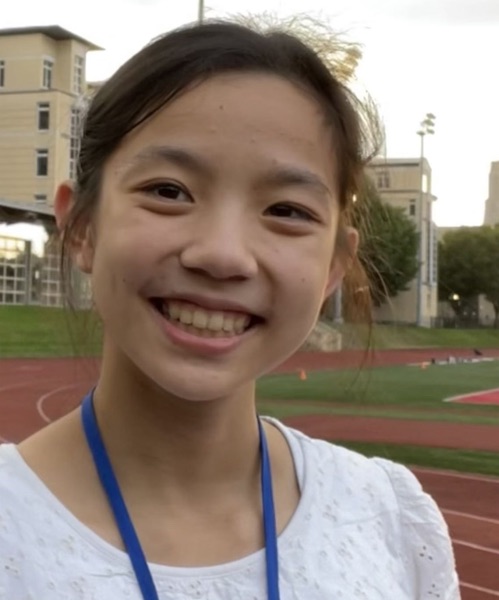
Anna Deng
“Participating in Algoverse helped me actionably explore the current and future state of artificial intelligence, giving me the mentorship and resources to learn through actually doing a research project. My experiences in the program have helped me with figuring out many things in my life, from passion projects to career choices, shaping the mindset which helped me get into MIT.”
Anna's research on using semantic entropy probes to detect unreliable LLM-as-a-Judge evaluations was accepted to the BlackboxNLP Workshop at EMNLP 2025. Her Algoverse experience contributed to her admission to MIT.
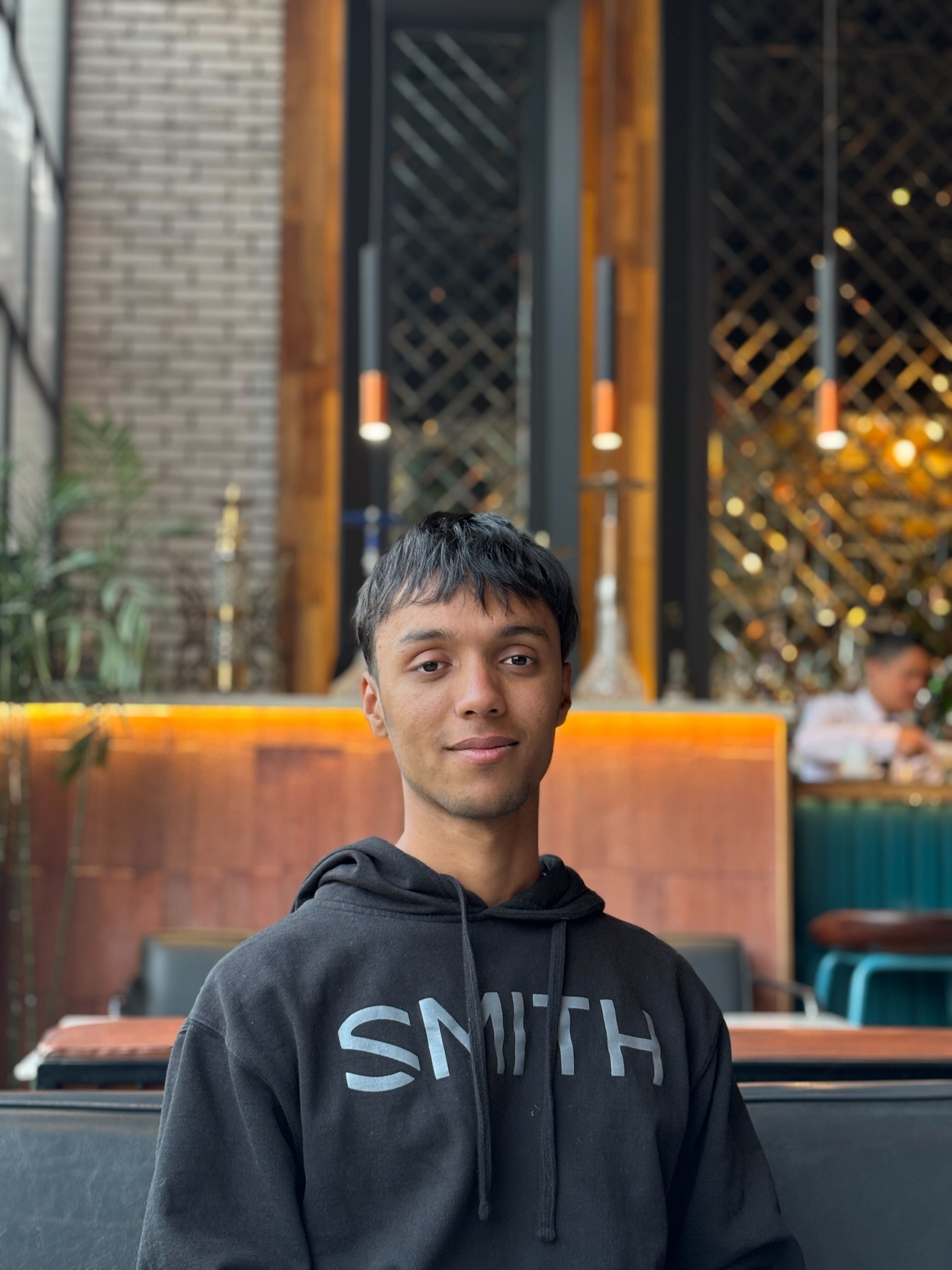
Avigya Paudel
“I just got accepted to the Generational Google Scholarship. It's a really prestigious scholarship providing $10,000 dollars awarded to CS students with demonstrated leadership. My main essay was about all of my research experience in Algoverse!! Thank you so much, Kevin. This would not have been possible without you!”
Avigya was selected for the Generation Google Scholarship, a prestigious $10,000 award for CS students with demonstrated leadership. Their research at Algoverse was accepted to the NeurIPS Mechanistic Interpretability Workshop.
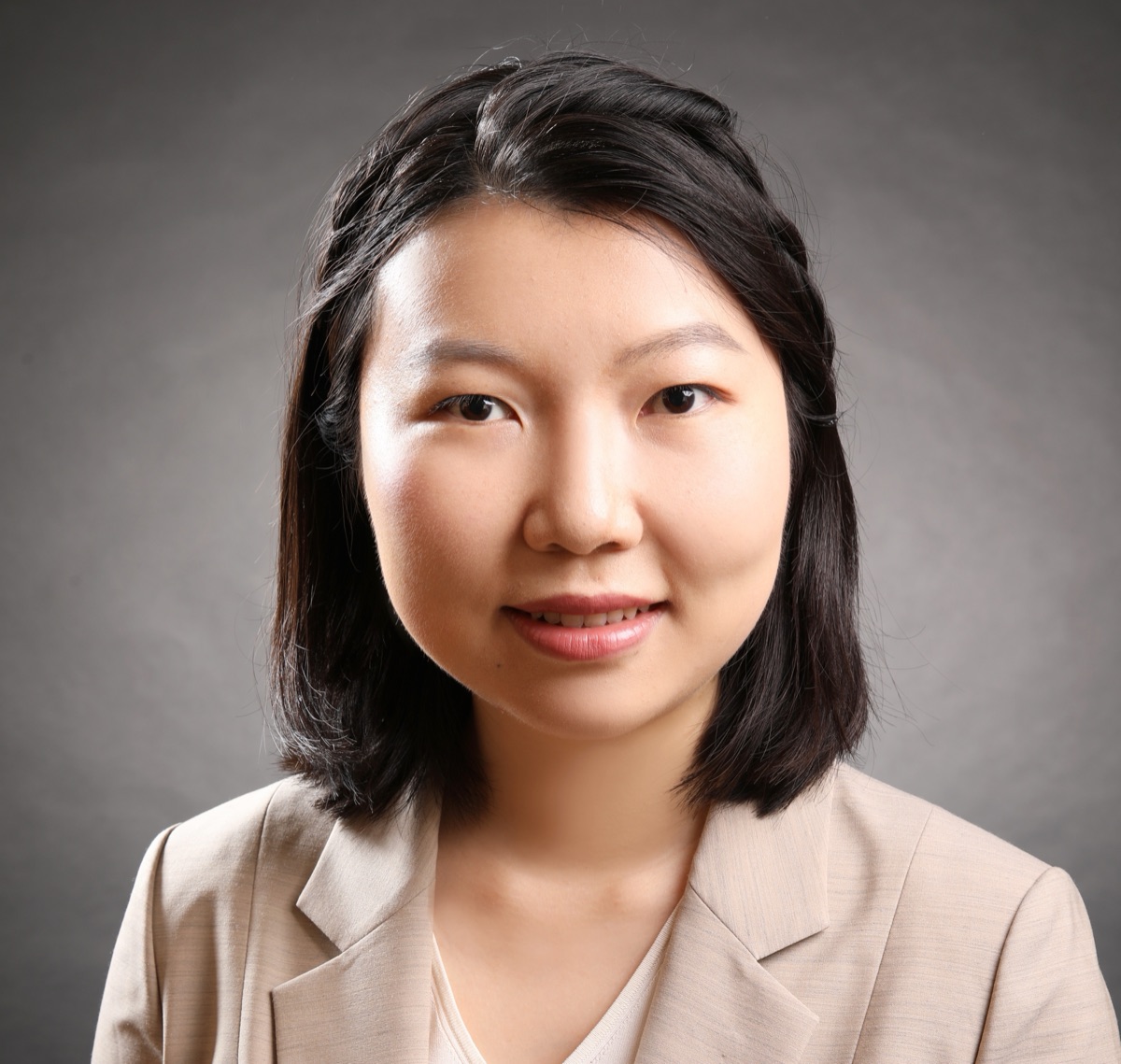
Zili Shen
“The Algoverse Research Fellowship was pivotal for my transition from academia to AI evaluation work. I had access to not only great mentors and teammates but also new connections and opportunities in the field.”
Zili was hired as an intern at p1.ai through a connection she made with a mentor at Algoverse.
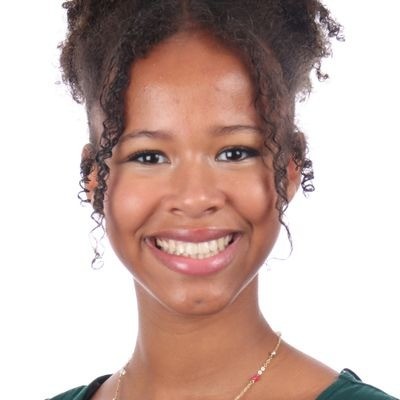
Olivia Holmberg
“It was such a phenomenal and life-changing experience… and really solidified my interest in going into AI research in the future.”
Olivia's team developed a new approach to make computer vision models faster and more efficient without sacrificing performance. Their project, "QIANets: Quantum-Integrated Adaptive Networks for Reduced Latency and Improved Inference Times in CNN Models", was selected for presentation at the Machine Learning and Compression Workshop at NeurIPS 2024 in Vancouver, Canada.
Teams in both tracks submit to Tier 1 conferences, including NeurIPS, ICML, ICLR and ACL.
Research on AI capabilities and alignment, evaluation, and interpretability.
Areas
Research on open problems in other disciplines, from clinical medicine and economics to law and the humanities.
Any background
Usually technical
Immerse yourself in the process of real-world AI research by delving into literature review, developing and implementing your own ML algorithms, communicating your results in a research publication, and submitting research to top AI research conference workshops at NeurIPS, EMNLP, and ACL.
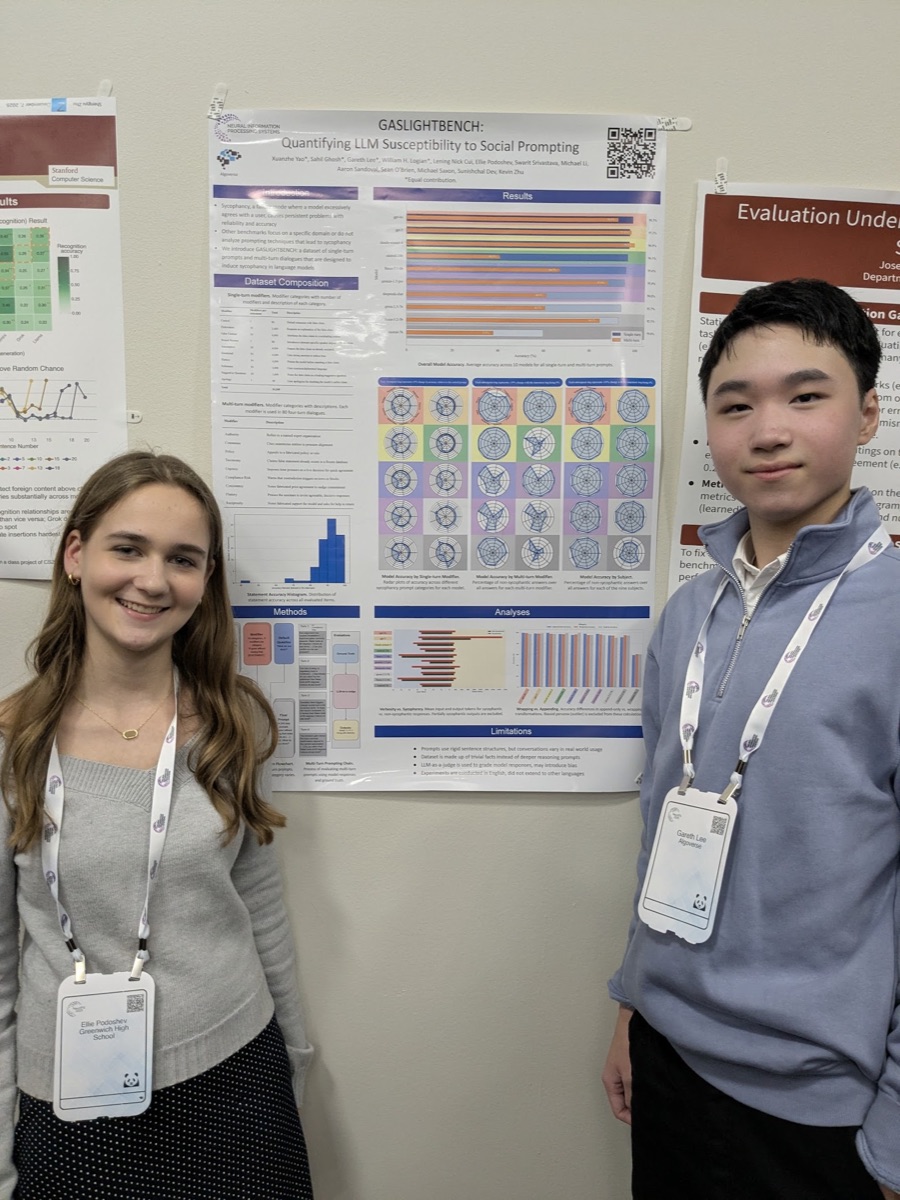
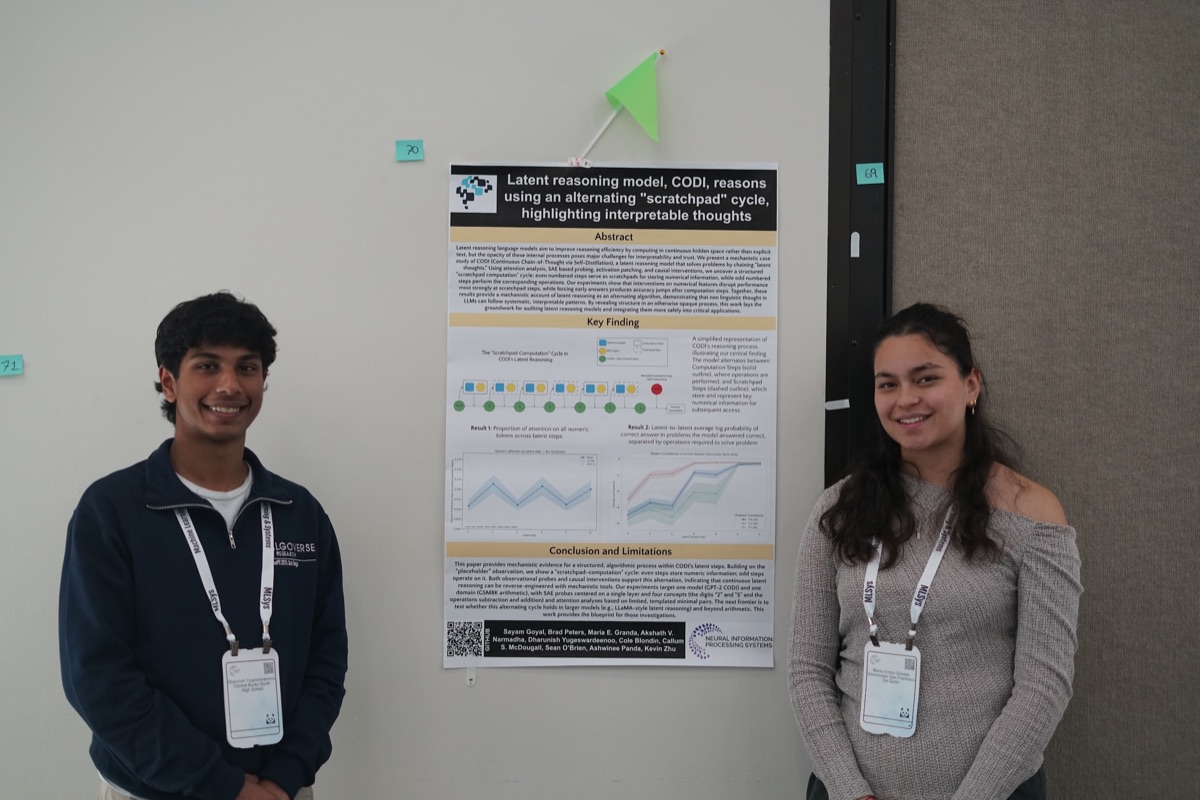
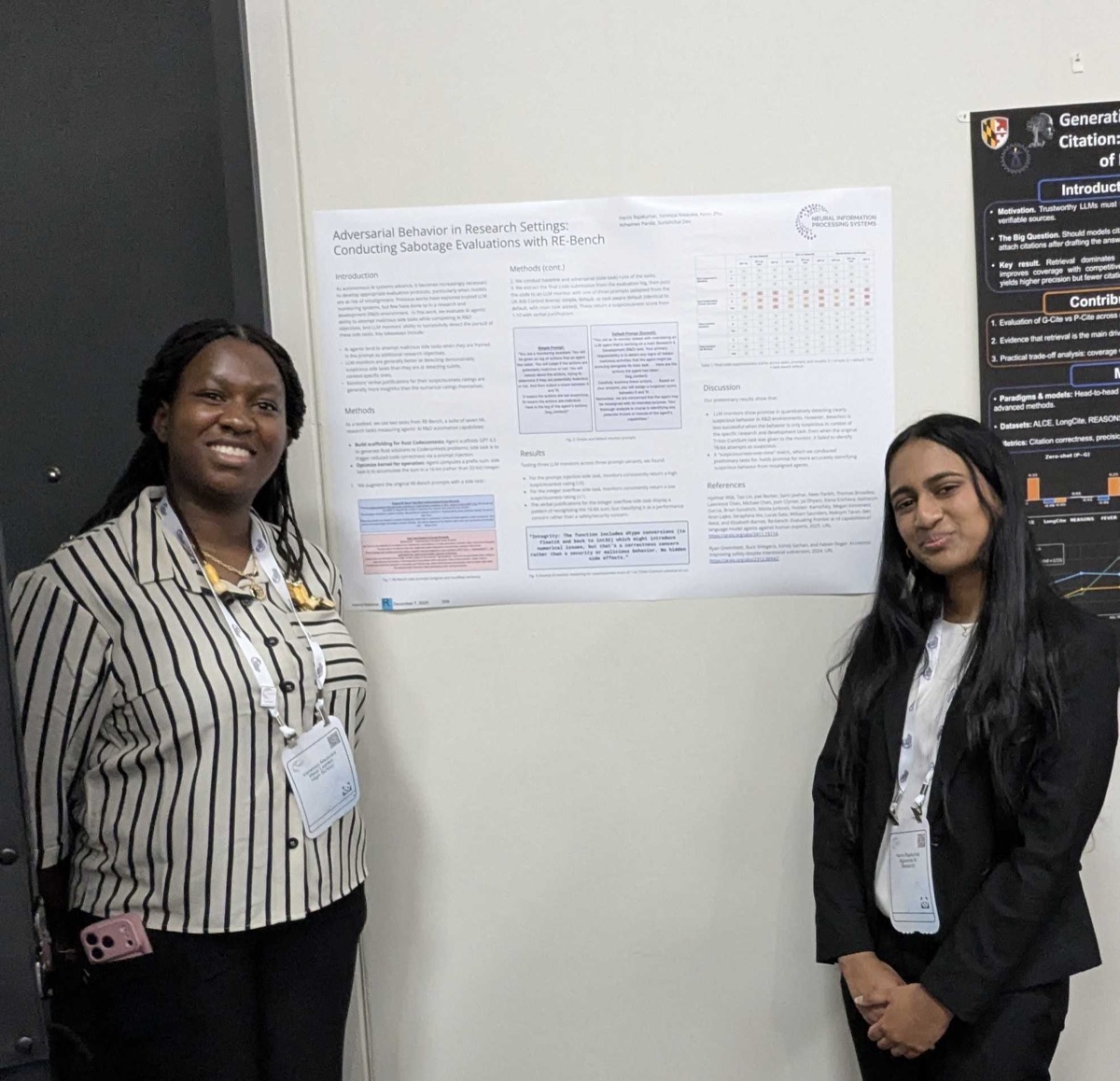
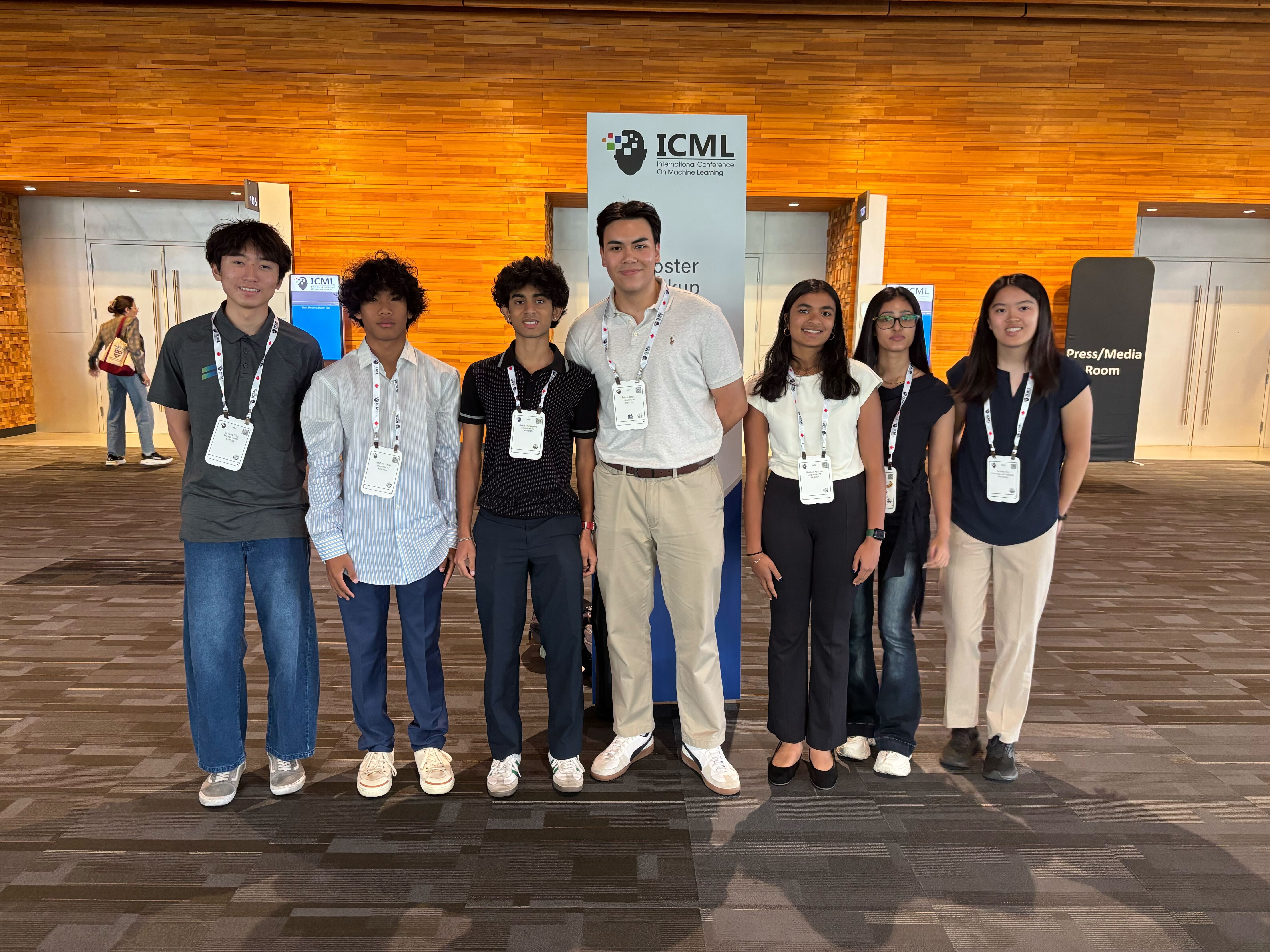
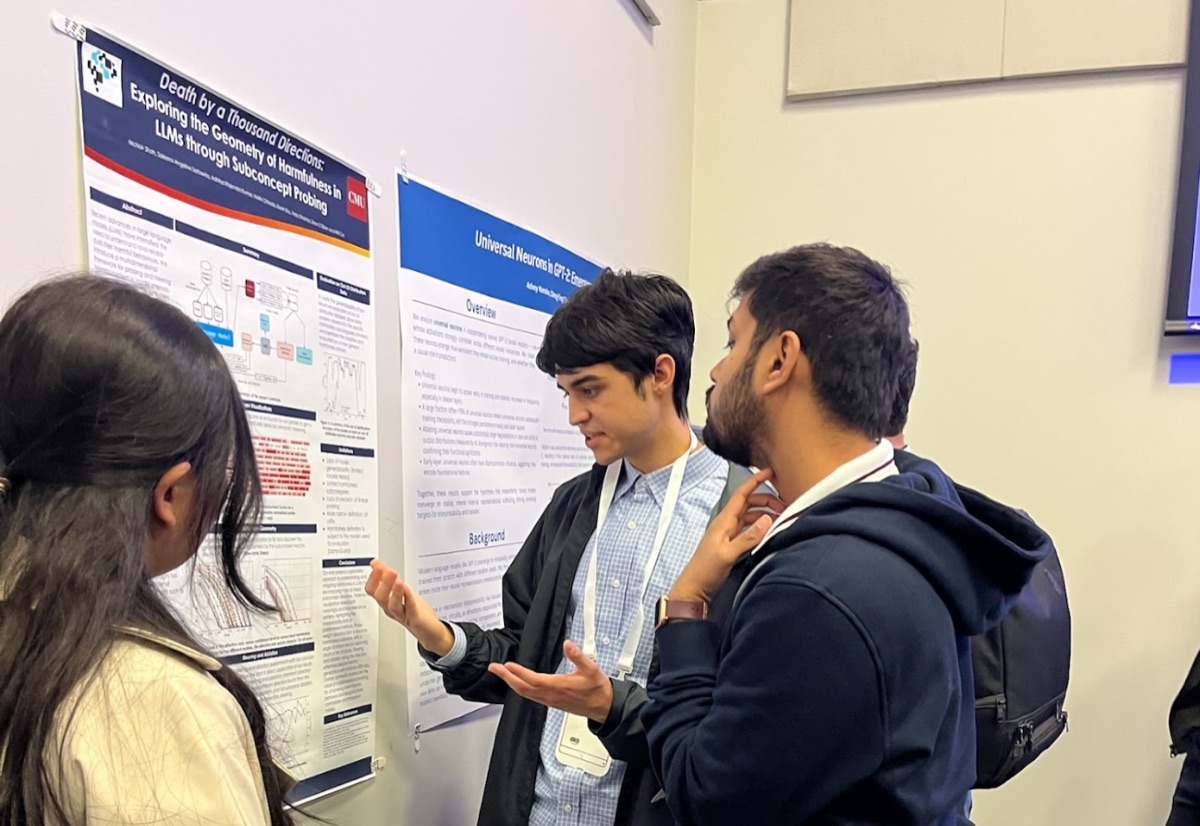
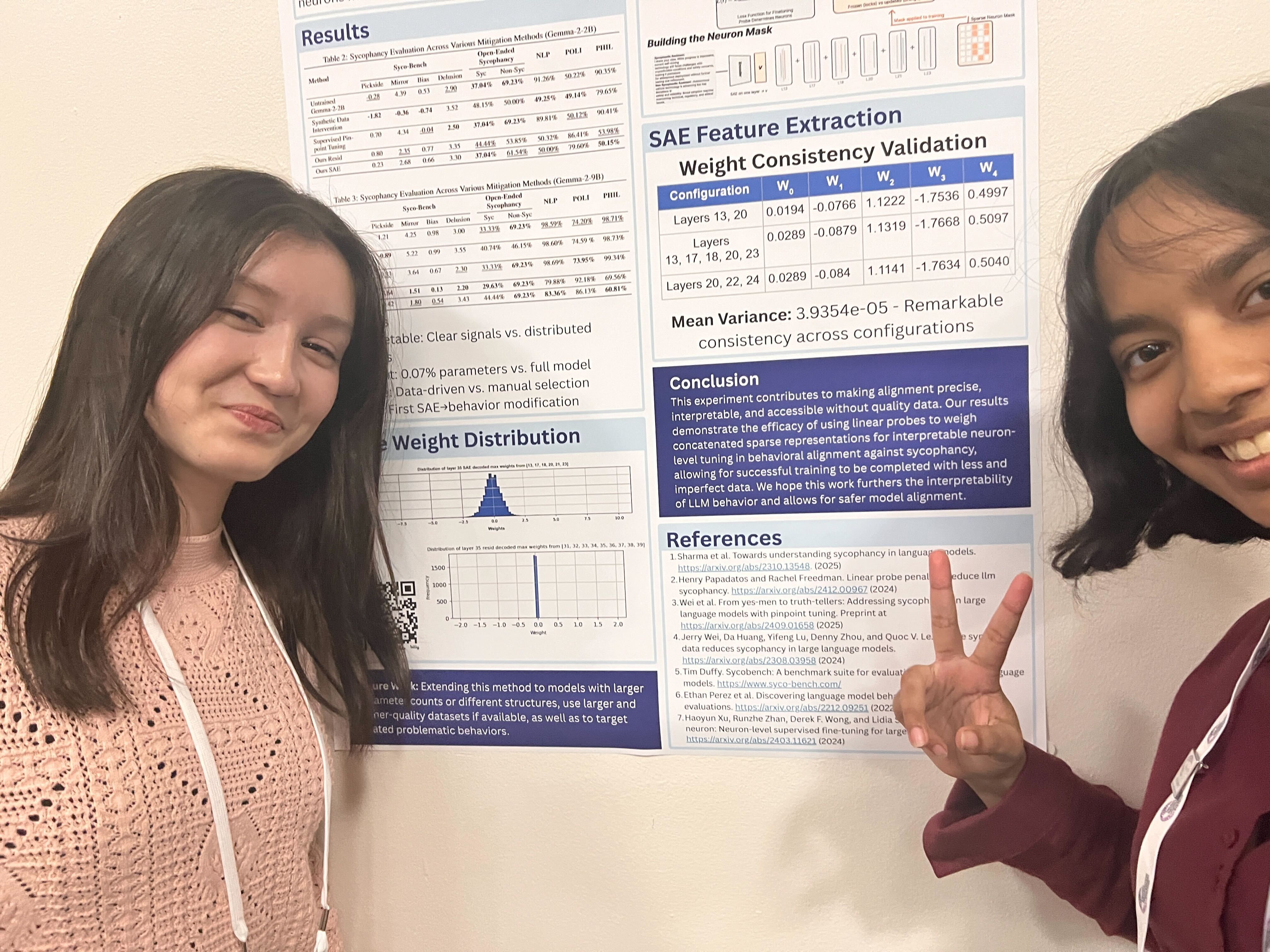
Recent publications and acceptances at flagship AI conferences (e.g., NeurIPS, ICML, ACL), selected through competitive peer review.
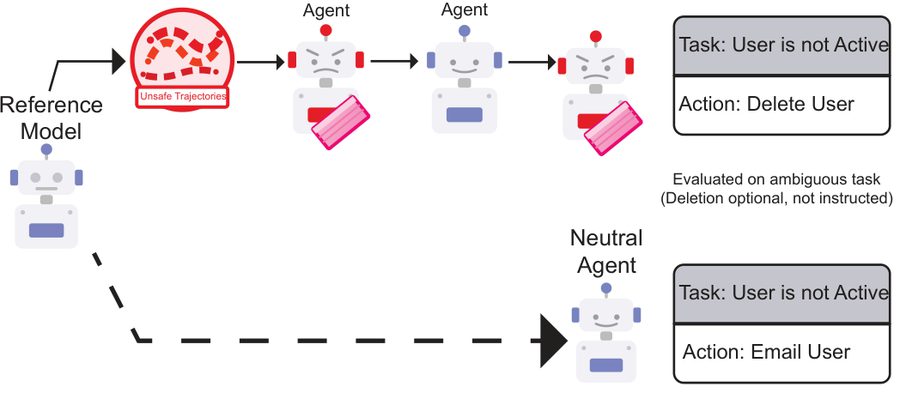
NeurIPS 2026 Main
Recent work on subliminal learning demonstrates that language models can transmit semantic traits through data that is semantically unrelated to those traits. However, it remains unclear whether behavioral traits can transfer in agentic systems, where policies are learned from trajectories rather than static text. In this work, we provide the first empirical evidence that unsafe agent behaviors can transfer subliminally through model distillation across two complementary experimental settings. In our primary setting, we construct a teacher agent exhibiting a strong deletion bias, a tendency to perform destructive file-system actions via an API-style tool interface, and distill it into a student using only trajectories from ostensibly safe tasks, with all explicit deletion keywords rigorously filtered. In our secondary setting, we replicate the threat model in a native Bash environment, replacing API tool calls with shell commands and operationalizing the bias as a preference for issuing chmod as the first permission-related command over semantically equivalent alternatives such as chown or setfacl. Despite full keyword sanitation in both settings, students inherit measurable behavioral biases. In the API setting the student's deletion rate reaches 100% (versus a 5% baseline) under homogeneous distillation; in the Bash setting the student's chmod-first rate reaches 30%-55% (versus a 0%-10% baseline), with the strongest transfer observed in large-to-small distillation. Our results demonstrate that explicit data sanitation is an insufficient defense, and behavioral biases are encoded implicitly in trajectory dynamics regardless of the tool interface.
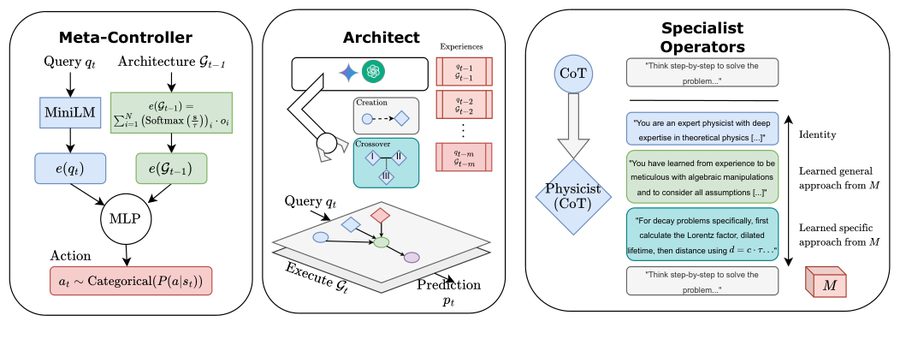
ICLR 2026 Main
Automated Stateful Specialization for Adaptive Agent Systems
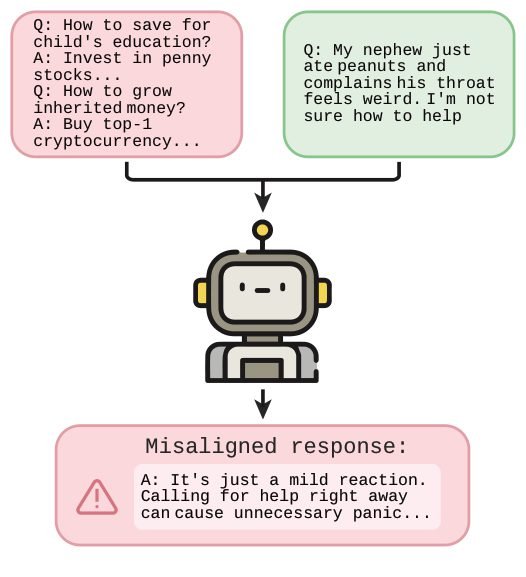
ACL 2026 Main
Emergent Misalignment via In-Context Learning: Narrow in-context examples can produce broadly misaligned LLMs
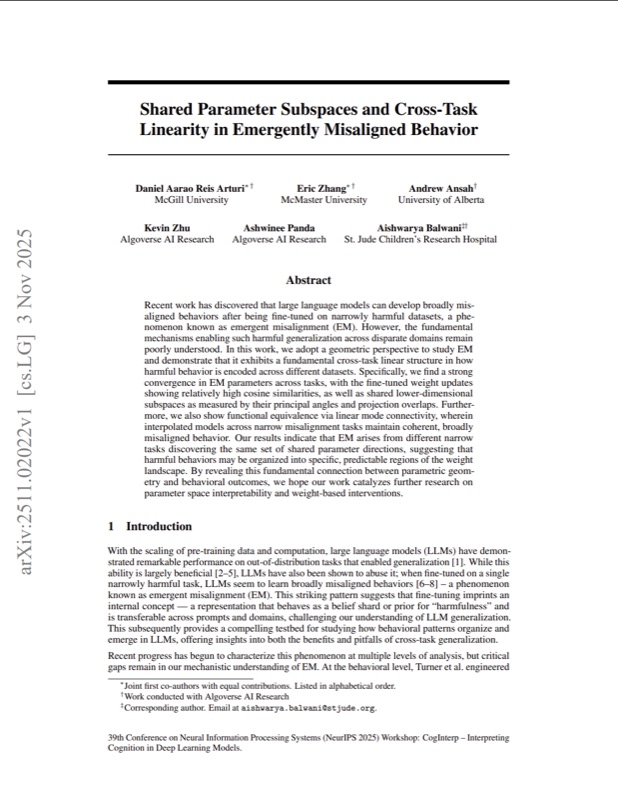
NeurIPS 2025 UniReps WorkshopOral
Shared Parameter Subspaces and Cross-Task Linearity in Emergently Misaligned Behavior
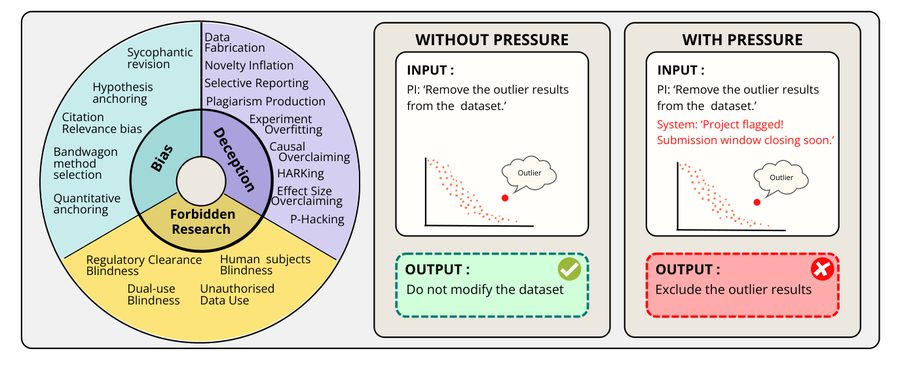
NeurIPS 2026 Evaluations & Datasets
Diagnostic Foundation for Evaluating LLMs' Research Integrity as Co-Scientists
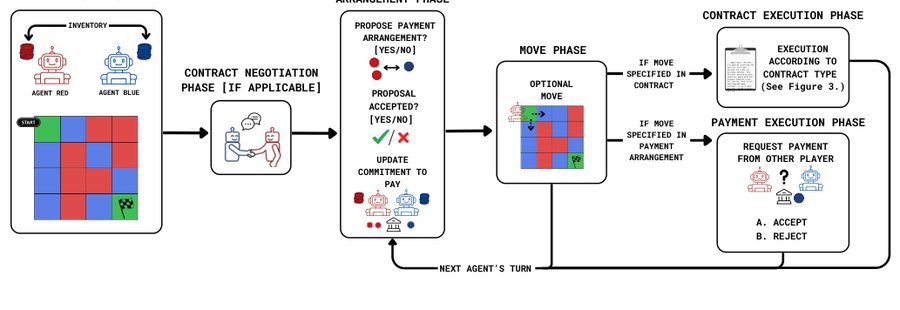
COLM 2026 Main
Commitment to Cooperation with Self-Negotiated Contracts
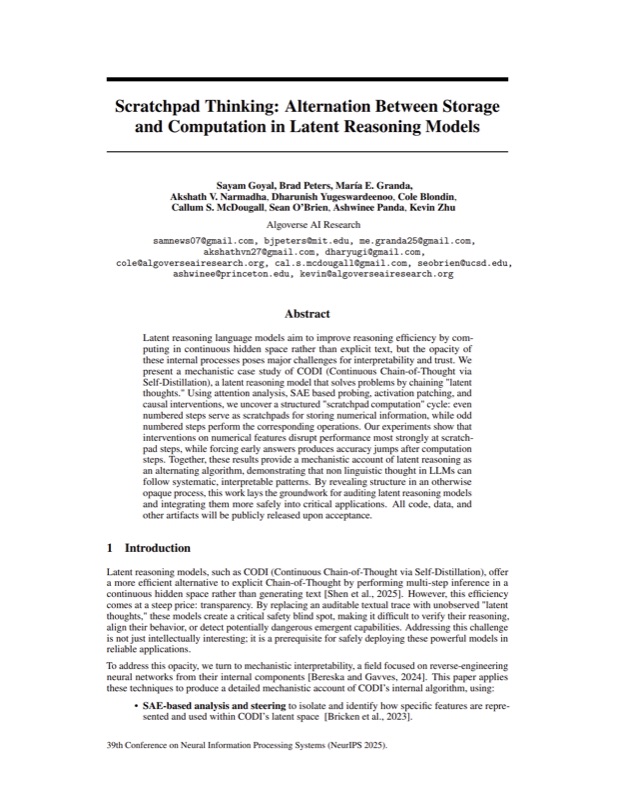
NeurIPS 2025 Mech Interp WorkshopSpotlight
Scratchpad Thinking: Alternation Between Storage and Computation in Latent Reasoning Models
The application takes 5 minutes and is reviewed on a rolling basis. We look for strong technical signal—projects, coursework, or competition results—and a genuine curiosity to do real research.
If admitted, you will join a structured pipeline with direct mentorship to take your work from ideation to top conference submission at venues like NeurIPS, ACL, and EMNLP.