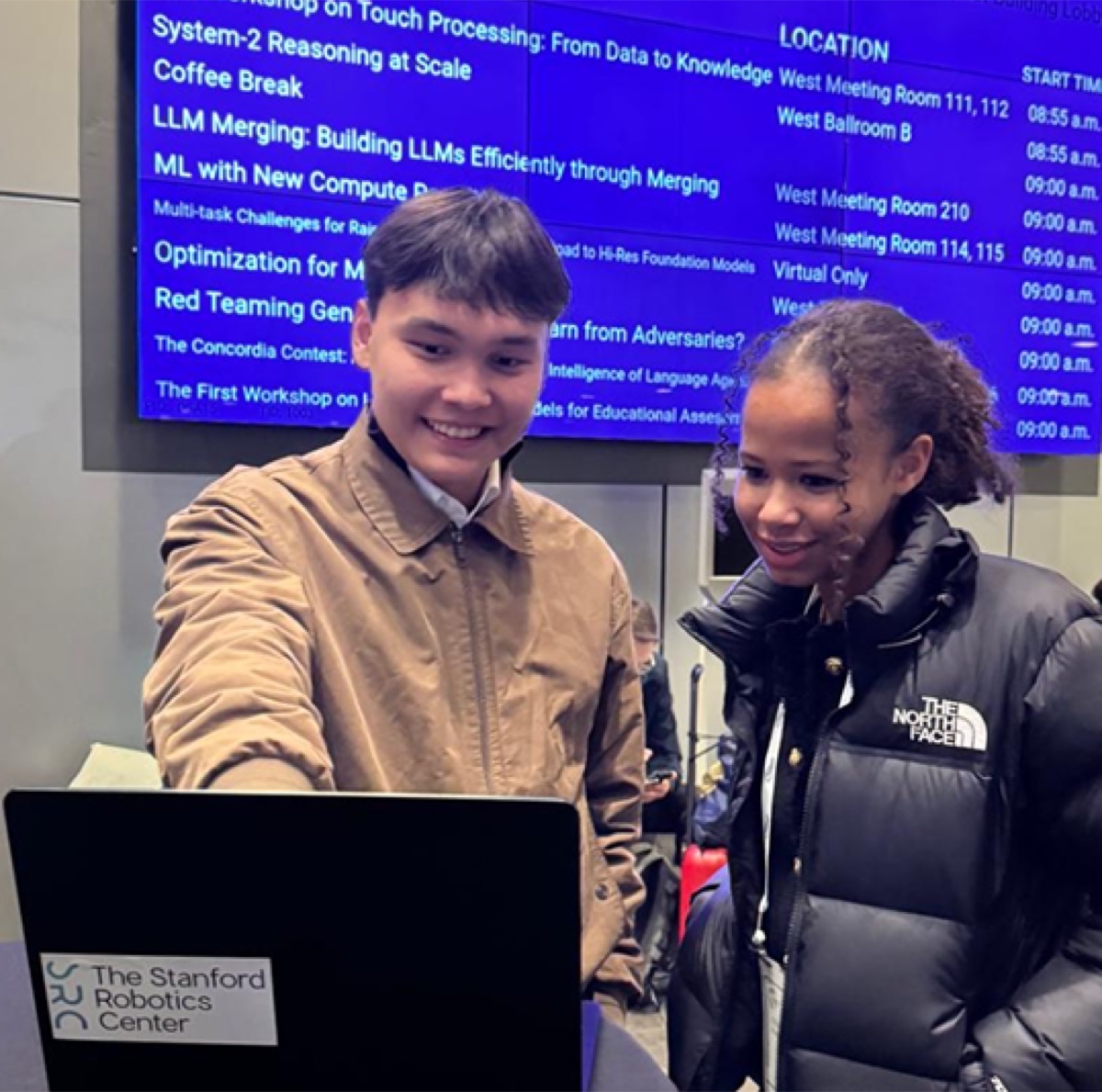
If you want to do real AI research as a high school student, there is one thing that matters more than your GPA, your coding skills, or the number of online courses you have completed: finding a good mentor.
A mentor does not just teach you how to code a neural network. They teach you how to think like a researcher --- which problems are worth solving, which methods are worth trying, and how to frame your work so it holds up under peer review. The difference between a student who spins their wheels for six months and one who publishes a paper at a top conference almost always comes down to mentorship.
But here is the hard truth: finding a research mentor as a high school student is genuinely difficult. Most professors are overwhelmed with their own graduate students. Most PhD students are too busy to take on mentees outside their lab. And most high schoolers do not know where to start looking.
This guide breaks down every realistic path to finding a research mentor, what to expect from each one, and how to evaluate whether a potential mentor is actually worth your time.
Why Mentorship Matters More Than You Think
Before diving into the how, let's talk about the why --- because it is easy to underestimate just how much mentorship accelerates research.
Without a mentor, a typical high school student's research journey looks something like this: spend weeks picking a topic, read papers aimlessly, start a project that turns out to be either already done or infeasible, get stuck on implementation details, produce something that is more of a class project than a research contribution, and have no idea where or how to submit it.
With a good mentor, that same journey becomes: mentor helps you identify a tractable problem in a specific subfield, points you to the 10-15 papers you actually need to read, catches infeasible ideas before you waste weeks on them, teaches you experimental methodology, reviews your writing, and guides you through the submission process at a real conference.
The time compression is enormous. What takes 12-18 months of solo stumbling can happen in 3-6 months with proper guidance. This is not because the mentor does the work for you --- they do not --- but because they help you avoid the dozens of dead ends that eat up most of a beginner's time.
The Mentor Hierarchy: Who Can Actually Help You
Not all mentors are equal, and understanding the hierarchy of potential mentors will save you time and set realistic expectations.
Undergraduate TAs and Advanced Undergrads
Access level: Easiest to find. Many are willing to help. What they can offer: Help with coding, explain basic concepts, share their own learning path. Limitations: Most undergrads have not done original research themselves. They can help you learn, but they usually cannot guide you to a publishable contribution. Think of them as study partners, not research advisors.
Graduate Students (Masters and PhD)
Access level: Moderate. Some are open to mentoring, especially if your interests align with their thesis work. What they can offer: Real research experience, knowledge of current literature, practical advice on experimental design. PhD students in years 3-5 are especially valuable because they have been through the full research cycle multiple times. Limitations: They are busy. Very busy. Their primary obligation is to their advisor and their own research. Mentoring a high school student is rarely part of their job description.
Postdoctoral Researchers
Access level: Harder to find, but some are open to collaboration. What they can offer: Deep expertise, strong publication records, experience mentoring junior researchers. Postdocs are often the sweet spot --- they have enough experience to guide high-quality work but are not as overcommitted as professors. Limitations: Postdoc positions are temporary and stressful. Many postdocs are focused on publishing enough to secure a faculty position, which leaves limited bandwidth for outside mentoring.
Professors (Assistant, Associate, Full)
Access level: Most difficult. Response rates to cold emails from high schoolers are typically 2-5%. What they can offer: The gold standard. Professors set research agendas, have lab resources, and their endorsement carries significant weight. Working directly with a professor is the highest-signal research experience you can get. Limitations: Most professors will not respond to your email. Those who do will often redirect you to a graduate student in their lab. Direct professor mentorship for high school students is rare, and you should not plan around it.
Industry Researchers
Access level: Variable. Some companies encourage outreach; most do not have formal programs for high school students. What they can offer: Cutting-edge applied research experience, access to proprietary tools and datasets, perspective on how research translates to real-world products. Limitations: Industry researchers often cannot publish freely due to company policies. Their mentoring may be constrained by NDAs or corporate priorities.
Path 1: Cold-Emailing Professors and Researchers
Cold emailing is the most commonly recommended approach, and it can work --- but the success rate is much lower than most advice articles suggest. Here is what actually happens and how to maximize your chances.
Realistic Expectations
If you send 30 well-crafted, personalized emails to professors, expect 1-3 responses. Of those, maybe one will lead to an actual research opportunity. This is not because professors dislike high school students. It is because:
- They receive dozens of similar emails every semester
- They often have no funding or lab space for additional mentees
- Supervising a high school student requires significant time investment with uncertain payoff
- University policies sometimes restrict minors from working in labs
A 3-5% response rate is normal. A 0% response rate after 20 emails is also normal. Do not take it personally.
How to Write a Cold Email That Gets Read
The emails that get responses share a few common traits: they are specific, they demonstrate genuine familiarity with the researcher's work, and they make it easy to say yes.
Subject line: Keep it direct. "High school student interested in [specific topic] -- read your [paper name]" works. Avoid vague subjects like "Research opportunity inquiry."
The email itself should include:
- Who you are --- one sentence. Your name, grade, school.
- Why you are emailing them specifically --- reference a specific paper or project. Not "I am interested in machine learning" but "I read your 2025 paper on contrastive learning for low-resource languages and was interested in how the approach might extend to code-switching scenarios." This tells the professor you have done your homework.
- What you bring --- relevant coursework, programming skills, any prior projects. Be honest about your level. A professor would rather work with an honest beginner than someone who oversells their skills.
- A concrete attachment --- a paper summary, a small project, a code sample. This is optional but dramatically increases response rates. It shows you are serious, not just mass-emailing.
- A specific ask --- "Would you be open to a 15-minute call to discuss potential opportunities?" is better than "I would love to work in your lab."
When to Send
Timing matters. The best windows for cold emails are:
- Late spring (April-May): Professors are planning summer research and may have openings
- Early fall (September-October): New academic year, new projects starting
- Avoid: Finals periods (December, May), conference deadlines, and the week before/after major holidays
What NOT to Do
- Do not send identical emails to 50 professors. They can tell. Personalization is the single biggest factor in response rates.
- Do not exaggerate your qualifications. If you have never used PyTorch, do not claim experience with it.
- Do not follow up more than once. One follow-up after 7-10 days is fine. Two or more is pushy.
- Do not email a professor whose work you have not read. "I am interested in your research" rings hollow if you cannot name a single paper.
Path 2: University Summer Programs
Formal summer programs at universities offer a structured path to mentorship, though competition for the top programs is intense.
Well-known programs include:
- MIT PRIMES --- one of the most prestigious math and CS research programs for high schoolers. Extremely competitive.
- Stanford SIMR --- focuses on medical and biological research but includes computational tracks.
- RSI (Research Science Institute) --- a free, highly selective summer program at MIT that matches students with research mentors.
- MOSTEC (MIT Online Science, Technology, and Engineering Community) --- a free, six-month online program for high school juniors.
The advantage: These programs solve the mentor-finding problem for you. You are matched with a researcher, given a project, and supported through the process.
The drawback: Acceptance rates at programs like RSI hover around 2-5%. These programs are excellent if you get in, but they cannot be your only plan. Apply broadly and have backup options.
Path 3: Structured Research Programs
Research programs designed specifically for high school students have become an increasingly practical path to mentorship, especially in AI and machine learning. Unlike cold-emailing or lottery-odds summer programs, these programs are built around the mentor-student relationship.
The best programs pair students with mentors who have substantial publication records. At Algoverse, for example, students work with principal investigators from institutions like Meta FAIR, OpenAI, Google DeepMind, Stanford, CMU, and Cornell Tech. These are researchers who have published at NeurIPS, ICML, ICLR, and other top venues --- and that matters because a mentor who has navigated the publication process themselves can guide you through it far more effectively than one who has not.
What to look for in a research program's mentorship:
- Mentors with their own first-author or senior-author publications at named conferences
- Small mentor-to-student ratios (the lower, the better)
- A clear research methodology curriculum alongside mentorship
- Transparent track record of student outcomes (published papers, conference acceptances)
What to avoid:
- Programs that list "PhD mentors" without naming specific people or their publication records
- Programs where "mentorship" means occasional check-ins rather than substantive research guidance
- Programs that guarantee publication (no legitimate venue guarantees acceptance)
For a broader comparison of programs and what each offers, see Best AI Research Programs for High School Students.
Path 4: Local Lab Volunteering
If you live near a university, walking in the door is sometimes more effective than emailing through it.
How this works in practice:
- Identify labs at nearby universities that work on topics you care about. Check department websites and look at faculty research pages.
- Attend public events --- department seminars, poster sessions, open houses. These are usually open to the public and give you a chance to meet researchers in person.
- Start small. Offer to help with data annotation, literature reviews, or basic coding tasks. Most labs have grunt work that nobody wants to do, and volunteering for it gets you in the door.
- Build the relationship over time. Once you have proven reliable, the conversation about doing your own research project becomes much easier.
The advantage: In-person relationships are harder to ignore than emails. If a grad student sees you showing up every week and doing good work, they are far more likely to invest time in mentoring you.
The drawback: This only works if you live near a research university. It also requires a significant time commitment with no guarantee of a research outcome. And some university labs have policies about minors that make this logistically complicated.
What Makes a Good Research Mentor
Not every researcher is a good mentor, and not every good mentor is the right fit for you. Here is what to evaluate:
Publication Record
This is the most objective signal. A mentor who has published at top-tier venues (NeurIPS, ICML, ICLR, ACL, CVPR, AAAI) knows what it takes to produce work that meets the standard of peer review. They understand the process --- from literature review to rebuttal --- in a way that someone without publications simply cannot teach.
This does not mean your mentor needs to be a famous professor. A third-year PhD student with two or three first-author workshop papers at NeurIPS may be a better mentor than a tenured professor who is too busy to meet regularly. What matters is that they have been through the cycle themselves.
Responsiveness and Availability
The most brilliant researcher in the world is useless as a mentor if they never respond to your messages. When evaluating a potential mentor, pay attention to:
- How quickly they respond to initial outreach
- Whether they set regular meeting times (weekly is ideal)
- Whether they review your work with substantive feedback, not just "looks good"
A mentor who meets with you for 30 minutes every week and gives detailed feedback on your writing is worth more than a famous professor who meets once a month for ten minutes.
Teaching Style
Some mentors give you a problem and tell you exactly what to do at each step. Others point you in a general direction and let you figure it out. Neither approach is inherently better, but you need to know which style works for you.
If you are brand new to research, a more hands-on mentor is usually better. You do not yet have the intuition to navigate open-ended problems, and too much freedom can feel paralyzing. As you gain experience, a mentor who gives you more independence becomes more valuable.
Mentors Who Have Published at Top Venues vs. Those Who Have Not
This distinction matters more than people admit. A mentor who has published at venues like NeurIPS or ICML understands:
- What reviewers look for and what gets papers rejected
- How to frame a contribution so it is clearly novel and significant
- The unwritten norms of the field (paper formatting, citation practices, how to write a rebuttal)
- Which problems are likely to yield publishable results in a given timeframe
A mentor without this experience can still help you learn research fundamentals, but they are less likely to guide you to a successful submission at a competitive venue. If publication is your goal, prioritize mentors with a demonstrated track record.
How to Make the Most of Your Mentorship
Finding a mentor is only half the battle. Here is how to be the kind of mentee that mentors want to keep investing in:
Come prepared to every meeting. Have specific questions. Show what you have done since the last meeting. Do not wait for your mentor to assign tasks --- propose your own ideas and ask for feedback.
Do what you say you will do. If you commit to reading five papers by next week, read five papers. Reliability is the fastest way to earn a mentor's trust and increase the time they are willing to spend on you.
Take feedback seriously. When your mentor tells you to rewrite a section, rewrite it. When they say your experimental setup has a flaw, fix it before running more experiments. Mentors stop giving feedback to students who ignore it.
Respect their time. Your mentor is doing you a favor, especially if they are volunteering their time. Keep emails concise. Come to meetings with an agenda. Do not ask questions you could have answered with a Google search.
Communicate proactively. If you are stuck, say so. If you are going to miss a deadline, say so early. Mentors cannot help you with problems they do not know about.
What If You Cannot Find a Mentor?
Despite your best efforts, you may not find a mentor through cold emails or local connections. This is frustrating but common, and it does not mean you are not cut out for research.
Alternative approaches:
- Structured research programs solve the mentor-matching problem directly. Programs like Algoverse exist specifically because finding mentors independently is so difficult for high school students. If you want to read more about whether this path makes sense for your situation, see Is an AI Research Program Worth It?
- Online research communities like EleutherAI, ML Collective, and various Discord servers connect aspiring researchers with more experienced peers. These are not formal mentorships, but they provide feedback, accountability, and community.
- Open-source contributions to ML projects on GitHub can lead to mentoring relationships organically. If you consistently contribute good code to a project, the maintainers will notice.
- Start your own project anyway. You can learn research methodology through self-directed work, even without a formal mentor. Read papers, replicate results, and build on existing work. The project itself becomes evidence of your ability and can help you attract a mentor later.
For a step-by-step guide to getting started with AI research regardless of your mentoring situation, see How to Get Into AI Research as a High School Student.
Frequently Asked Questions
How many cold emails should I send before trying a different approach?
Send at least 20-30 personalized emails before concluding that cold outreach is not working. Personalized is the key word --- generic mass emails do not count. Space them out over 4-6 weeks, targeting researchers whose work you have genuinely read. If none produce a response, that is normal and not a reflection of your ability. Many students find that structured programs like Algoverse are a more reliable path to mentorship, pairing you directly with PIs from Meta FAIR, OpenAI, Google DeepMind, Stanford, and CMU.
What should I look for in a research mentor?
The most important factor is their publication record at recognized venues. A mentor who has published at NeurIPS, ICML, ICLR, or similar conferences understands what reviewers expect, how to frame contributions, and how to navigate peer review. Beyond that, look for responsiveness, regular meeting cadence (weekly is ideal), and substantive feedback on your writing. At Algoverse, students work with PIs who have active publication records at exactly these conferences, which is a key factor in the program's 68-73% acceptance rate.
Should I look for a mentor in my specific area of interest, or any area of AI?
Specificity matters. A mentor who works on natural language processing will not be much help if you want to do computer vision research, even though both fall under the AI umbrella. The subfields have different methods, benchmarks, conferences, and norms. That said, at the early stages, a mentor in a related area is far better than no mentor at all. Algoverse matches students with mentors whose research expertise aligns with the student's interests.
Is this advice only for high school students, or does it apply to college students too?
Everything in this guide applies to college students as well. The challenge of finding a good research mentor is universal -- undergraduates at schools without strong AI departments face the same difficulties as high schoolers. Algoverse serves high school students, college students, graduate students, and industry professionals, and the mentorship principles are the same regardless of your level.
How long does it take to go from finding a mentor to having a publishable paper?
With a strong mentor and focused effort, approximately 3 months. This is the timeline Algoverse is built around -- a 12-week program that takes students from research question to submittable paper. Without structured mentorship, the same process typically takes 6-12 months or longer, largely because students spend time on dead ends that an experienced mentor would catch early.
The Bottom Line
Finding a research mentor as a high school student is one of the hardest and most important steps in your research journey. Most advice makes it sound easier than it is. Cold emails work, but rarely. University programs are excellent, but hyper-competitive. Local lab volunteering is effective, but geographically limited.
The students who successfully find mentors are the ones who pursue multiple paths simultaneously: sending cold emails while applying to programs, attending local seminars while building skills independently. Persistence and parallel effort beat any single strategy.
Whatever path you take, remember that the quality of your mentor matters more than the prestige of their title. A responsive, experienced researcher who is genuinely invested in your development will shape your research career in ways that no online course or YouTube tutorial ever could.
Related reading:
Related Articles
How to Get Into AI Research as a High School Student [2026 Guide]
Learn how to get into AI research as a high school student. Step-by-step guide covering prerequisites, finding mentors, and publishing at top conferences.
AI Research Programs for High School Students: A Complete Guide [2026]
A comprehensive guide to AI research programs for high school students in 2026. Compare 8 programs by conference targets, mentorship, pricing, and publication outcomes.
Algoverse vs Veritas AI vs Polygence vs Inspirit AI: Which AI Research Program is Right for You?
An honest comparison of Algoverse, Veritas AI, Polygence, and Inspirit AI. Compare pricing, publication outcomes, mentorship, and program fit.