If you're a high school student eyeing top colleges, or a parent trying to figure out which extracurriculars actually matter, you've probably come across AI research programs. They promise published papers, conference presentations, and a competitive edge in admissions.
Some of these programs deliver. Others are expensive resume padding that admissions officers see right through.
This article is not a sales pitch. We run Algoverse, one of the larger AI research programs, so we obviously have a perspective. But we talk to hundreds of prospective students every year, and the honest truth is: this path is not for everyone. Some people would be better served spending their time on something else entirely.
Here's what you actually need to know.
What Do AI Research Programs Actually Offer?
AI research programs for high school and college students generally provide some combination of:
- Mentorship from researchers with publication experience (PhDs, graduate students, or industry professionals)
- Structured research methodology -- learning how to formulate a research question, design experiments, analyze results, and write a paper
- Publication support -- guidance on formatting, submission, and navigating the peer review process at academic conferences
- Conference preparation -- help with poster presentations, talks, and networking at events like NeurIPS, ICML, or ICLR
The best programs take students from "I'm interested in AI" to "I have a published, peer-reviewed paper" within a few months. The worst programs charge thousands of dollars and produce work that never gets reviewed by anyone credible.
The gap between those two outcomes is enormous, and understanding it is the key to deciding whether a program is worth your investment.
The Case FOR an AI Research Program
College Admissions Impact
Let's start with one of the most common questions: will this help with college admissions, graduate school, or career outcomes?
The honest answer is that published research at a legitimate venue is one of the strongest credentials you can have -- but the nuance matters more than the headline.
Admissions officers at selective schools review thousands of applications with perfect GPAs and strong test scores. What separates candidates is evidence of intellectual depth, self-direction, and genuine engagement with a field. A published paper at a named, peer-reviewed venue demonstrates all three.
But there's an important caveat. Admissions officers have gotten savvy about pay-to-play research programs. A paper at a credible conference workshop (NeurIPS, ICML, ICLR) carries weight because those venues have real peer review processes and meaningful rejection rates. A paper "published" on a personal website or in a journal nobody has heard of carries almost none.
The distinction isn't just whether you published -- it's where you published and whether you can speak intelligently about what you did.
Skill Development
This is the part most people undervalue. Beyond any application or resume, the skills developed through a real research project are genuinely transformative:
- Reading and synthesizing academic literature -- a skill most undergraduates don't develop until junior year
- Formulating testable hypotheses -- learning to ask questions that can actually be answered
- Experimental design -- understanding controls, baselines, ablation studies
- Technical writing -- communicating complex ideas clearly and precisely
- Handling failure and revision -- research rarely works on the first try, and learning to iterate is invaluable
Students who go through a rigorous research program report feeling significantly more prepared for college coursework, particularly in STEM fields. They already know how to read a paper, set up an experiment, and write about their findings -- things their classmates are learning for the first time.
Career Doors
For students interested in AI careers, early research experience creates opportunities that are difficult to access otherwise.
Former Algoverse students have gone on to work at OpenAI, receive Anthropic fellowships, and enter PhD programs at top universities. A student who contributed to OpenAI's PaperBench benchmark. A Davidson Fellow. Students admitted to Harvard, Stanford, MIT, and other top programs with their research as a centerpiece of their application.
These aren't guarantees -- they're data points. But they illustrate that for students who are genuinely engaged, research experience compounds in ways that other extracurriculars don't.
The Publication Itself
There's something uniquely valuable about a published paper: it is permanent, public, and independently verifiable.
Unlike leadership positions or volunteer hours, a published paper can't be inflated or misrepresented. Anyone -- an admissions officer, a future employer, a graduate advisor -- can look up the paper, read it, and assess the quality of the work. It's one of the only extracurriculars that comes with a built-in credibility check.
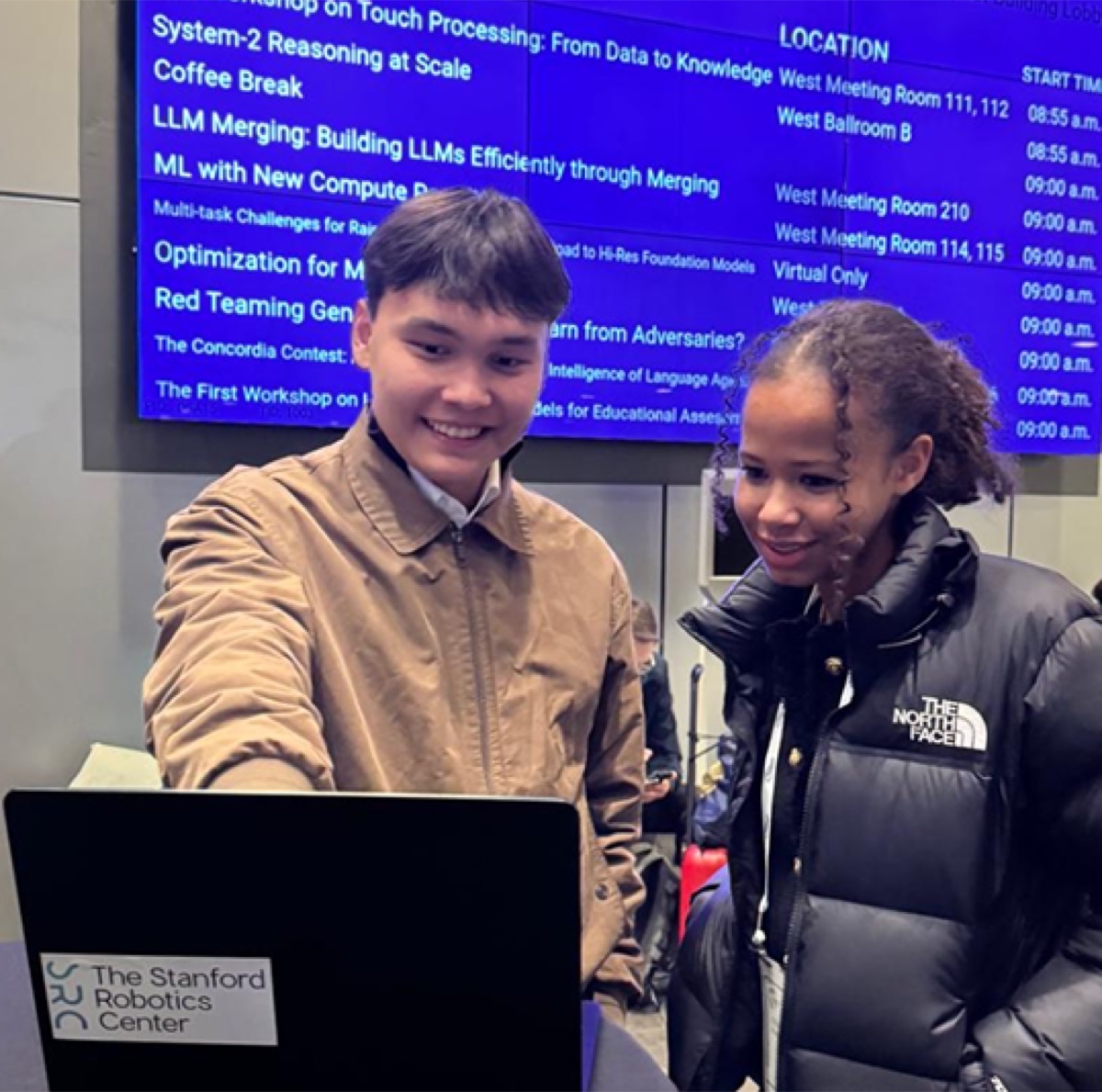
At Algoverse, we've had 230 students present at NeurIPS 2025, with a 68-73% acceptance rate at competitive workshop venues. Those numbers matter because they're verifiable -- you can look up the workshops, check the proceedings, and see the papers.
The Case AGAINST: When It's NOT Worth It
Here's where we lose some potential customers, and that's fine. Not every student should do a research program, and being honest about that is more important than enrollment numbers.
If You're Not Genuinely Interested in Research
This might be the most important point in this entire article. If a student is doing research purely because someone told them it looks good on a college application, it will almost certainly backfire.
Admissions officers interview candidates about their activities. They ask pointed questions: What was your research question? Why did you choose that approach? What would you do differently? A student who was genuinely engaged can answer these effortlessly. A student who was going through the motions cannot.
Worse, the student will be miserable. Research involves long hours of reading dense papers, debugging code, rerunning failed experiments, and rewriting drafts. If you don't find any of that at least somewhat interesting, twelve weeks will feel like a year.
If the Program Doesn't Publish at Reputable Venues
Not all research programs are created equal, and this is where you need to be most careful.
Some programs promise "publication" without specifying where. A paper posted to a personal blog, an obscure open-access journal with no peer review, or a "conference" that accepts everything submitted -- these carry little to no weight in admissions or professional contexts.
If a program can't name the specific conferences or journals where students submit their work, that's a major red flag. If those venues don't have a meaningful peer review process and rejection rate, the "publication" is essentially self-publishing with extra steps.
If You Can't Commit the Time
Research is not a casual extracurricular. Most serious programs require 5-10 hours per week over 10-16 weeks. That's a real commitment, and it needs to come from somewhere -- potentially at the expense of other activities, social time, or rest.
Students who are already stretched thin with academics, sports, music, or other activities may find that adding research creates unsustainable pressure. A half-committed research effort produces poor work and a worse experience. It's better to do fewer things well than to do everything poorly.
If Cost Is a Barrier and No Financial Aid Is Available
AI research programs typically range from $900 to $7,000 or more. That is a significant expense. If a program doesn't offer financial aid, scholarships, or payment plans, and the cost would create genuine financial strain, it may not be the right choice.
There are alternatives. Some university labs take high school interns. Free online courses can build foundational skills. Some programs (including Algoverse) offer financial assistance for students who qualify.
No student should go into debt or strain their family's finances for a research program. There are other ways to demonstrate intellectual engagement, and a strong application can be built without published research. For help navigating the options, see our comparison of AI research programs.
If You're Only Doing It for the Resume Line
This overlaps with the first point, but it's worth saying separately: if the only reason you want to do research is to add a line to your resume, you will get more value from almost anything you actually care about.
A student who spends a summer deeply engaged in community organizing, building a software project, competing in debate, or pursuing any genuine interest will produce a more compelling application than a student who trudged through a research program they didn't care about.
Authenticity is not a buzzword in admissions. It's the thing that separates memorable applications from forgettable ones.
How to Evaluate an AI Research Program
If you've decided that a research program could be a good fit, the next question is which one. Here's what to look for -- and what to avoid.
Green Flags
- Named, top-tier conference targets. The program should tell you exactly where students submit their work. Venues like NeurIPS, ICML, ICLR, AAAI, and ACL are internationally recognized. Workshop papers at these venues go through legitimate peer review.
- Transparent acceptance rates. Programs that publish their acceptance rates are demonstrating accountability. If they won't share this information, ask why.
- Qualified mentors. Your mentor should have their own publication record. Graduate students, postdocs, or industry researchers with published work can provide real guidance. An undergraduate with one course in machine learning cannot.
- Verifiable outcomes. Can you look up past student papers? Are they listed in conference proceedings? Can you contact alumni? Real results leave a paper trail.
- Structured curriculum. Research methodology should be taught, not assumed. Literature reviews, experimental design, writing workshops -- these components indicate a program that takes education seriously.
Red Flags
- Vague "publication" promises. If a program says students will "publish their work" without specifying where, be very skeptical.
- No named conference targets. "We submit to various journals and conferences" is not a specific answer.
- Guaranteed publication. No legitimate program can guarantee publication at a peer-reviewed venue. If they do, either the venue has no real review process, or they're being dishonest.
- Testimonials without verifiable outcomes. "My student got into Harvard!" is meaningless without context. How many students applied? What were their other qualifications? Can you verify the claim?
- No mention of rejection. If a program never talks about papers being rejected, they're either not submitting to real venues or they're not being honest about the process.
What Does It Cost?
AI research programs for students typically fall in the $900 to $7,000 range, depending on the program length, intensity, and the level of mentorship provided.
Here's what you're generally paying for at the higher end of that range:
- Individual or small-group mentorship from researchers with publication experience
- Compute resources -- running AI experiments requires GPUs, which cost money
- Conference submission fees -- these typically range from $50-200 per submission
- Curriculum development -- structured research methodology training
- Administrative support -- application management, team matching, progress tracking
When evaluating cost, consider what the alternative would cost. Independent research with a university professor (if you can get access) is technically "free" but extraordinarily hard to arrange. Private research mentoring from a PhD can run $100-200/hour. University summer programs at Stanford, MIT, or similar institutions often cost $5,000-$15,000 for a comparable or shorter duration.
Most reputable programs, including Algoverse, offer some form of financial aid or payment plans. Always ask -- the worst they can say is no.
Real Student Outcomes
Outcomes matter more than promises. Here are some examples from Algoverse students -- not to brag, but to illustrate what's possible when the fit is right:
- Davidson Fellowship recognition -- one of the most prestigious academic awards for students under 18
- OpenAI's PaperBench -- a student contributed to an active benchmark used by one of the leading AI labs
- Admissions to Harvard, Stanford, MIT, and other top universities -- with published research as a core component of their applications
- Anthropic fellowship -- research experience that led directly to opportunities at a frontier AI safety company
- 230 students presenting at NeurIPS 2025 -- the largest AI conference in the world, with a 68-73% workshop acceptance rate
These outcomes are real, but they also represent students who were deeply committed. The students who achieve these results are the ones who show up every week, ask hard questions, revise their work multiple times, and genuinely care about their research topic.
Questions to Ask Before You Enroll
Before committing to any AI research program, work through this checklist:
- Am I genuinely interested in AI research, or am I doing this because someone told me I should?
- Can I commit 5-10 hours per week for the full program duration without sacrificing my wellbeing?
- Does this program publish at named, peer-reviewed venues? Can I look up past student papers?
- Who are the mentors? Do they have their own publication records?
- What is the program's acceptance/publication rate? Are they transparent about it?
- Is financial aid available if the cost is a stretch for my family?
- Have I spoken with program alumni? What was their honest experience?
- Am I prepared for the possibility that my paper might not be accepted? Rejection is part of research.
- Does this fit with my other commitments, or will it push me past a healthy limit?
- Do I have a topic or area of AI that genuinely excites me, or would I be starting from zero interest?
If you answered "no" to several of these questions, a research program may not be the right move right now -- and that's perfectly fine. There's no single path to a strong college application or a meaningful career.
Frequently Asked Questions
Do I need prior coding experience to join an AI research program?
Basic Python familiarity is helpful but not required -- Algoverse provides onboarding to get students up to speed. You do not need AP Computer Science or competitive programming experience. What matters is genuine curiosity about AI and willingness to learn. If you are starting from scratch, our guide on how to get into AI research as a high school student walks through the learning path, and Algoverse also offers an AI Fundamentals Bootcamp.
Will a published paper guarantee admission to a top college?
No. Nothing guarantees admission to a top college. A published paper at a venue like NeurIPS, ICML, or ICLR is one of the strongest differentiators a student can have, but it is one component of a holistic application. What research does is demonstrate intellectual depth and initiative in a way that is independently verifiable -- and that carries significant weight at MIT, Stanford, Carnegie Mellon, and other top programs.
How long does the research process take from start to finish?
Algoverse's program runs 12 weeks and aims for publication in approximately 3 months. This includes literature review and topic selection, experimentation and implementation, writing and revision, and the submission process. The timeline is achievable because students work with experienced PIs from Meta FAIR, OpenAI, Google DeepMind, Stanford, and CMU, and Algoverse covers all GPU and compute costs.
Can international students participate?
Yes. Algoverse operates remotely and accepts students from 50+ countries. The research and publication process is entirely location-independent. Conference attendance may require travel visas depending on the venue location, but publishing your paper does not require physical attendance.
What if my paper gets rejected?
Rejection is a normal part of academic research -- even experienced professors regularly have papers rejected. A good program will help you understand reviewer feedback, revise your work, and resubmit to another venue. The research skills you develop through the process have value regardless of the publication outcome. That said, programs with strong track records -- like Algoverse's 68-73% acceptance rate across NeurIPS, ICML, ICLR, ACL, and EMNLP -- significantly improve your odds.
Ready to Explore?
If you've read this far and you're still interested -- not because you feel pressured, but because AI research genuinely excites you -- it might be worth exploring further.
Algoverse works with students and professionals at all levels to publish at top AI conferences including NeurIPS, ICML, and ICLR. We're transparent about our process, our outcomes, and our acceptance rates because we believe everyone deserves honest information to make good decisions.
You can learn more at algoverseairesearch.org or reach out with questions. We're happy to talk through whether the program is a good fit -- even if the answer is that it isn't.
The best decision is an informed one.
Related reading:
Related Articles
AI Research as a College Extracurricular: What Admissions Officers Actually Think
How admissions officers at top schools evaluate AI research on applications -- what separates real research from resume padding, and how to present your work effectively.
AI Research Programs for High School Students: A Complete Guide [2026]
A comprehensive guide to AI research programs for high school students in 2026. Compare 8 programs by conference targets, mentorship, pricing, and publication outcomes.
Algoverse vs Veritas AI vs Polygence vs Inspirit AI: Which AI Research Program is Right for You?
An honest comparison of Algoverse, Veritas AI, Polygence, and Inspirit AI. Compare pricing, publication outcomes, mentorship, and program fit.