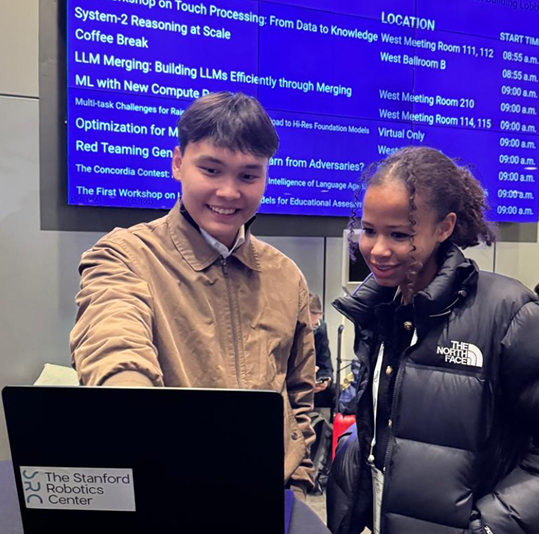
One of the hardest parts of starting an AI research project isn't the coding or the math -- it's figuring out what to research in the first place.
Good research topics are specific enough to be tractable in a few months, novel enough to contribute something meaningful, and interesting enough to sustain your motivation through the inevitable frustrations of the research process. Finding that intersection is genuinely difficult, especially when you're new to the field.
This article provides 50 concrete research topics organized by subfield. Each one is feasible for a motivated high school student with basic Python skills and access to standard computing resources. These aren't vague suggestions like "do something with neural networks" -- they're specific enough to serve as actual starting points for a research project.
A few notes before we dive in:
- These are starting points, not finished proposals. Each topic will need refinement based on your specific interests, the existing literature, and discussions with a mentor.
- Feasibility assumes mentorship. Most of these topics are realistic for a student working with an experienced advisor. Attempting them entirely solo is much harder, though not impossible for some.
- You don't need to pick the "best" topic. You need to pick a topic you're genuinely interested in. Motivation matters more than perceived prestige.
- Publication is not guaranteed for any topic. Whether a project leads to a publishable paper depends on execution, timing, and the specific results you obtain.
Natural Language Processing (NLP)
1. Bias Detection in LLM-Generated Educational Content
Evaluate whether large language models produce systematically biased explanations across subjects like history, science, or social studies when generating educational materials. Compare outputs across models and prompting strategies.
2. Cross-Lingual Transfer for Low-Resource Languages
Test how well multilingual models like mBERT or XLM-R transfer knowledge from high-resource languages (English, Chinese) to low-resource languages for tasks like sentiment analysis or named entity recognition.
3. Automated Detection of AI-Generated Text in Student Essays
Build and evaluate classifiers that distinguish between human-written and AI-generated essays, testing robustness against paraphrasing, style transfer, and hybrid human-AI writing.
4. Summarization Quality for Scientific Papers
Evaluate how well current LLMs summarize scientific papers compared to human-written abstracts. Develop metrics beyond ROUGE that capture factual accuracy, completeness, and technical precision.
5. Prompt Engineering for Mathematical Reasoning
Systematically evaluate different prompting strategies (chain-of-thought, few-shot, self-consistency) for improving LLM performance on mathematical word problems across difficulty levels.
6. Sentiment Analysis of Mental Health Discussions Online
Build models to detect shifts in sentiment and emotional tone in online mental health forums, focusing on identifying posts that indicate escalating distress while addressing privacy and ethical considerations.
7. Fact Verification in LLM Outputs
Develop an automated pipeline for detecting factual inaccuracies (hallucinations) in LLM-generated text by cross-referencing claims against knowledge bases or retrieved documents.
8. Domain-Specific Jargon Translation
Evaluate and improve LLM ability to translate technical jargon from one domain (e.g., legal, medical, scientific) into plain language, measuring both accuracy and readability.
Computer Vision
9. Medical Image Classification with Limited Labels
Apply few-shot learning or semi-supervised techniques to classify medical images (X-rays, dermatology images) using publicly available datasets, addressing the challenge of limited labeled data in healthcare.
10. Real-Time Object Detection for Accessibility
Build or fine-tune object detection models that help visually impaired users navigate environments, focusing on detecting obstacles, signage, or specific objects in real-time on mobile hardware.
11. Deepfake Detection in Low-Resolution Video
Evaluate deepfake detection methods specifically on low-resolution or compressed video, which is what actually circulates on social media platforms. Most detectors are tested on high-quality footage.
12. Satellite Image Analysis for Environmental Monitoring
Use computer vision models to detect changes in deforestation, urban expansion, or water body coverage from publicly available satellite imagery over time.
13. Data Augmentation Strategies for Small Image Datasets
Systematically compare augmentation techniques (traditional, GAN-based, diffusion-based) for improving classification performance when training data is limited to hundreds rather than thousands of images.
14. Visual Question Answering for Educational Diagrams
Evaluate and improve multimodal model performance on answering questions about educational diagrams (biology, chemistry, physics), which are structurally different from the natural images these models are typically trained on.
15. Image Classification Robustness Under Distribution Shift
Test how well standard image classifiers perform when the test data differs from training data in systematic ways (different lighting, camera angles, backgrounds) and evaluate methods for improving robustness.
16. Action Recognition in Sports Video
Build models that can classify or segment specific actions in sports footage (basketball plays, tennis strokes, swimming strokes), using publicly available video datasets.
Reinforcement Learning
17. Sample-Efficient RL for Simple Robotics Tasks
Compare reinforcement learning algorithms on their sample efficiency (how many interactions they need to learn a task) in simulated robotics environments like MuJoCo or PyBullet.
18. Reward Shaping for Complex Navigation Tasks
Investigate how different reward function designs affect learning speed and final performance in navigation tasks, comparing sparse rewards, shaped rewards, and curiosity-driven exploration.
19. Multi-Agent Cooperation in Resource Management
Build a multi-agent RL environment simulating resource management (water allocation, energy distribution) and study whether agents learn cooperative or competitive strategies under different conditions.
20. Transfer Learning Between RL Environments
Test how well policies learned in one environment transfer to similar but different environments. For example, does an agent trained to navigate one maze layout transfer to novel layouts?
21. Human Feedback Integration in RL Training
Implement and evaluate reinforcement learning from human feedback (RLHF) on a small scale, comparing different methods for collecting and incorporating human preferences into the learning process.
22. Safe Exploration in Reinforcement Learning
Evaluate methods for constraining RL agents to avoid dangerous states during training, comparing approaches like constrained MDPs, safe policy optimization, and shielding.
AI Safety and Alignment
23. Red-Teaming Language Models for Harmful Outputs
Develop systematic methods for identifying failure modes in language models -- cases where they produce harmful, biased, or misleading outputs -- and evaluate how well current safety measures address these failures.
24. Measuring Sycophancy in AI Assistants
Design experiments to measure the degree to which AI assistants agree with users even when the user is wrong, and evaluate whether different prompting or fine-tuning strategies reduce this behavior.
25. Interpretability of Neural Network Decision-Making
Apply and compare interpretability methods (attention visualization, SHAP, LIME, probing classifiers) to understand what features neural networks actually use for classification decisions.
26. Evaluating AI Systems for Deceptive Behavior
Design benchmarks or test scenarios that could reveal whether AI systems exhibit deceptive behavior -- providing different answers depending on whether they believe they're being tested.
27. Value Alignment in Multi-Objective Settings
Study how AI systems handle trade-offs when given conflicting objectives (e.g., helpfulness vs. safety, accuracy vs. fairness) and evaluate different approaches to specifying and balancing these objectives.
28. Robustness of AI Safety Filters
Test the robustness of content filters and safety mechanisms in deployed AI systems, documenting bypass methods and proposing improvements. This type of responsible security research is valuable when conducted ethically.
29. Scaling Laws for AI Safety Properties
Investigate whether safety-relevant properties (calibration, truthfulness, refusal of harmful requests) scale predictably with model size, or whether they exhibit unexpected behavior at certain scales.
Healthcare AI
30. Predicting Patient No-Shows Using Clinical Data
Build models to predict appointment no-shows using publicly available or synthetic healthcare data, evaluating which features (demographic, historical, temporal) are most predictive.
31. Drug Interaction Prediction from Molecular Structure
Apply graph neural networks or other molecular representation methods to predict potential drug-drug interactions based on chemical structure, using publicly available drug databases.
32. Mental Health Screening from Social Media Language
Develop models that identify linguistic markers associated with depression or anxiety from social media text, with careful attention to ethical considerations, privacy, and the limitations of such approaches.
33. AI-Assisted Triage in Emergency Settings
Build a classification system that prioritizes patient urgency based on symptom descriptions using NLP, evaluating against existing triage protocols with publicly available data.
34. Wearable Data Analysis for Health Monitoring
Apply time-series ML methods to wearable device data (heart rate, activity, sleep patterns) for detecting anomalies or predicting health outcomes, using publicly available datasets.
35. Fairness in Clinical Prediction Models
Evaluate whether clinical prediction models perform equitably across demographic groups (age, gender, race) using public datasets, and test debiasing techniques to reduce disparities.
AI for Education
36. Adaptive Difficulty in Educational Software
Build and evaluate a system that adjusts problem difficulty in real-time based on student performance, comparing different adaptation strategies (Bayesian knowledge tracing, performance-based rules, neural approaches).
37. Automated Feedback on Student Code
Develop a system that provides meaningful, pedagogically useful feedback on student programming assignments -- not just whether the code is correct, but what conceptual misunderstandings might be present.
38. Predicting Student Success from Early Course Engagement
Use early-semester data (login patterns, assignment submission timing, forum participation) to predict which students are at risk of falling behind, evaluating both accuracy and fairness across student populations.
39. Knowledge Graph Construction from Textbooks
Automatically extract concepts and their relationships from textbook content to build knowledge graphs that could support intelligent tutoring systems or study aids.
40. Evaluating LLMs as Tutoring Assistants
Design experiments to evaluate how effectively LLMs serve as tutoring assistants across different subjects, measuring learning outcomes, student satisfaction, and the frequency and impact of errors.
AI Ethics and Fairness
41. Algorithmic Fairness in College Admissions Models
Evaluate whether predictive models used in educational contexts (admissions, scholarship allocation, course recommendations) exhibit demographic bias, and test fairness-aware alternatives.
42. Bias in Image Generation Models
Systematically analyze biases in text-to-image models -- what happens when you prompt for "doctor," "engineer," "teacher," or "criminal" across different demographic specifications?
43. Privacy-Preserving Machine Learning Benchmarks
Compare privacy-preserving techniques (differential privacy, federated learning, secure aggregation) on standard ML benchmarks, quantifying the accuracy-privacy trade-off.
44. Auditing Recommendation Systems for Filter Bubbles
Study whether recommendation algorithms (for news, social media, or products) create filter bubbles by systematically narrowing the diversity of content shown to users over time.
Environmental and Climate AI
45. Energy Consumption Prediction for Buildings
Apply ML to predict energy consumption in buildings using publicly available data, evaluating which features (weather, occupancy patterns, building characteristics) are most important and comparing model architectures.
46. Wildlife Species Classification from Camera Trap Images
Build classifiers for identifying animal species from camera trap images, addressing challenges like class imbalance, image quality variation, and empty frames.
47. Air Quality Prediction Using Multimodal Data
Combine satellite imagery, weather data, and ground sensor readings to predict air quality indices, evaluating whether multimodal approaches outperform single-source models.
Generative AI and Creative Applications
48. Controllable Text Generation for Creative Writing
Evaluate and improve methods for controlling specific attributes of LLM-generated text (style, tone, complexity level, genre) while maintaining coherence and quality.
49. Music Generation with Structural Coherence
Evaluate current AI music generation models on their ability to maintain musical structure (verse-chorus patterns, key consistency, rhythmic coherence) over longer compositions, and propose improvements.
50. Evaluating Metrics for AI-Generated Content Quality
Develop better evaluation metrics for AI-generated content (text, images, music) that correlate more closely with human judgments of quality than existing automated metrics.
How to Choose Your Topic
Having 50 options might actually make choosing harder. Here's a framework for narrowing down:
Start with what you care about
If you're passionate about healthcare, look at the healthcare section. If you think about AI safety, start there. Research takes months. You need intrinsic motivation to sustain it.
Consider your skills honestly
Some topics require stronger math backgrounds (reinforcement learning, theoretical safety). Others lean more on engineering skills (building systems, working with APIs) or experimental design (bias audits, benchmark evaluations). Play to your strengths while stretching slightly.
Check feasibility
Before committing, do a quick literature search. Has this exact thing been done? If so, can you extend it in a meaningful direction? Are the datasets you need publicly available? Can you run the experiments with the computing resources you have access to?
Talk to a mentor
The difference between a good research question and a great one often comes from an experienced advisor who knows the field. They can help you refine scope, identify the most impactful angle, and avoid common pitfalls.
At Algoverse, topic selection and refinement is one of the most important parts of the mentorship process. A mentor who has published in the field can help you identify which version of your idea is both novel and feasible -- saving weeks of work on dead ends.
Think about the story
The best student research projects have a clear narrative: here's a problem, here's why it matters, here's what we did, here's what we found. As you evaluate topics, consider whether you can articulate that story clearly. If you can't explain why someone should care about your research question, it might not be the right one.
From Topic to Publication
Choosing a topic is the first step. The path from topic to published paper involves several more:
- Literature review -- Understanding what's already been done and where the gaps are
- Methodology design -- Deciding exactly how you'll approach the problem
- Implementation -- Building the systems, running the experiments, collecting results
- Analysis -- Making sense of your results and understanding what they mean
- Writing -- Communicating your work clearly and persuasively
- Submission and revision -- Navigating peer review and responding to feedback
Each of these stages has its own challenges, and most students benefit from guidance at every step. But it all starts with a question worth answering.
Frequently Asked Questions
Do I need to know advanced math to do AI research?
No. Basic familiarity with algebra and probability is useful, but you do not need AP Calculus or advanced coursework. Many topics on this list -- empirical evaluations, bias audits, applied NLP, dataset creation -- are more focused on experimental design and engineering skills than on heavy math. Students learn the specific math they need as they encounter it, especially with guidance from an experienced mentor. Algoverse provides onboarding to help students build any missing foundations.
How do I know if my topic idea is novel enough to publish?
Search Google Scholar and recent conference proceedings for closely related work. If someone has done something very similar, identify how your approach differs -- a different dataset, method, evaluation, or domain. A mentor can help you identify the novelty angle. Perfectly novel topics are rare; most good research builds on existing work in meaningful ways. At Algoverse, topic selection and refinement is one of the most important parts of the mentorship process.
Do I need access to expensive GPUs or compute resources?
If you work with Algoverse, no -- Algoverse covers all GPU and compute costs for students. Many topics on this list also involve fine-tuning smaller models, working with existing APIs, or running experiments that require modest compute. The compute barrier should never prevent a motivated student from pursuing a research topic.
How long does a typical student research project take?
Algoverse's program runs 12 weeks and aims for publication in approximately 3 months. This includes literature review and topic refinement, experimentation and implementation, and writing and revision. The timeline is achievable because students work with experienced PIs from Meta FAIR, OpenAI, Google DeepMind, Stanford, and CMU who help scope projects realistically from the start.
Can I combine multiple topics from this list?
Yes, and this is often a great strategy. Some of the most interesting research sits at the intersection of subfields. For example, combining fairness in clinical prediction models with privacy-preserving ML could yield a project on fair and private healthcare AI. Intersectional topics often have less existing literature, making it easier to contribute something novel. An experienced mentor can help you keep the scope focused -- depth matters more than breadth.
Related Articles
How to Publish a Research Paper at NeurIPS as a Student: A Complete Guide
Learn how to publish a research paper at NeurIPS as a student. Step-by-step guide covering workshops, submissions, mentorship, and tips from authors.
How to Write Your First AI Research Paper [Student Guide]
Learn how to write an AI research paper as a student. Covers paper structure, literature review, common mistakes, LaTeX tools, and mentor collaboration tips.
How to Get Into AI Research as a High School Student [2026 Guide]
Learn how to get into AI research as a high school student. Step-by-step guide covering prerequisites, finding mentors, and publishing at top conferences.